
Does PCOS Make You Tired?
Yes, polycystic ovary syndrome (PCOS) can be associated with fatigue, low energy, and daytime sleepiness. If you’ve ever wondered, “Does PCOS make you tired even after a full night’s sleep?”, the answer may depend on several factors, including sleep quality, metabolic health, and other conditions that can affect your energy levels. You might wake up feeling exhausted or find that everyday tasks take more effort than they used to. Although PCOS may be part of the picture, it doesn’t explain every case of persistent tiredness.
PCOS affects hormonal and metabolic health and can influence menstrual cycles, ovulation, skin, and hair growth. Some people with PCOS also experience sleep difficulties, mood changes, or other health concerns that may contribute to fatigue. Understanding the possible connections can help you decide what to discuss with a healthcare professional rather than assuming that feeling tired all the time is simply part of having PCOS.
What Does PCOS Fatigue Feel Like?
PCOS fatigue can look different from one person to another. You might wake up without feeling rested, struggle to concentrate at work, or notice that your energy drops well before the end of the day. Even after taking a break, you may still feel as though you haven’t fully recovered. For some people, the biggest challenge is physical exhaustion; for others, it’s the mental effort required to get through an ordinary routine.
It’s also useful to distinguish fatigue from sleepiness. Fatigue means feeling physically or mentally drained, while sleepiness is the feeling that you could fall asleep. The two can happen together, but recognising the difference may help you describe your symptoms more clearly to a clinician.
If you’re asking, “Does PCOS make you tired all the time?”, remember that tiredness isn’t specific to PCOS. Poor sleep, iron deficiency, thyroid disorders, depression, anxiety, medication effects, and other health conditions can cause similar symptoms. Pay attention to when your fatigue occurs, how long it lasts, and whether it affects your daily activities. Those details can help a healthcare professional understand what’s happening.
Why Might PCOS Be Linked to Fatigue?
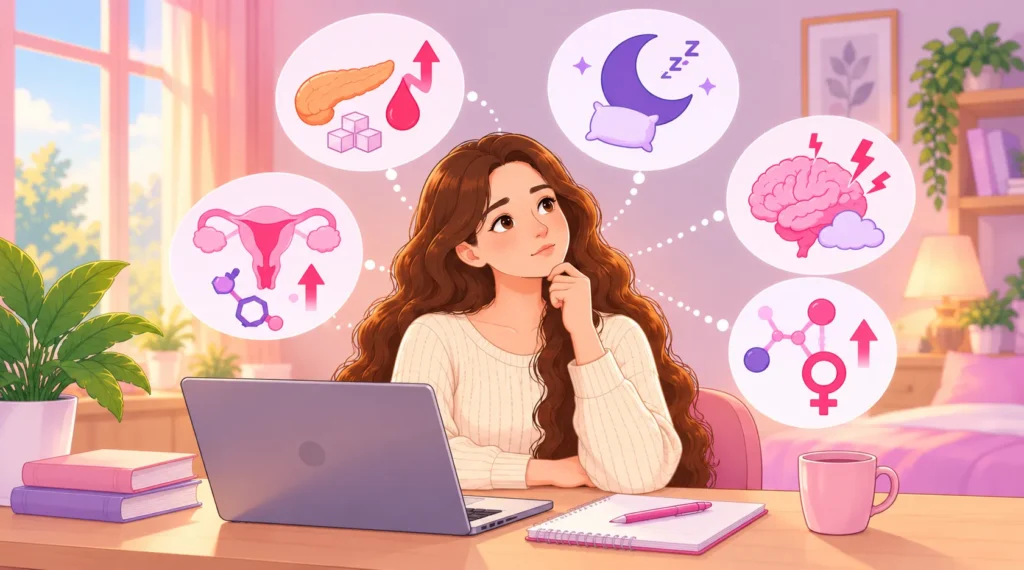
There isn’t one single explanation for PCOS-related fatigue. Several factors may contribute, and more than one may be involved at the same time. Research has examined the relationship between PCOS, metabolic health, and sleep problems, but an association doesn’t necessarily mean that PCOS directly causes tiredness in every person.
Insulin Resistance and Metabolic Health
Insulin helps your body use glucose for energy. When the body’s cells respond less effectively to insulin, a condition known as insulin resistance, the body may need to produce more insulin to help regulate blood glucose. Insulin resistance is commonly associated with PCOS, which makes metabolic health an important part of managing the condition.
However, feeling tired doesn’t automatically mean you have insulin resistance. Energy levels can be influenced by sleep, eating patterns, stress, and other medical conditions, so it’s misleading to assume that every energy dip is caused by blood sugar changes.
If you’re concerned about insulin resistance or your metabolic health, a healthcare professional can assess your individual risk and determine whether testing is appropriate. Balanced meals, a variety of nutrient-rich foods, and regular movement suited to your abilities can support general health, but these habits aren’t a guaranteed treatment for fatigue.
Sleep Problems and Sleep Apnea
Sometimes, the issue isn’t how long you sleep but how restorative that sleep is. Research suggests that obstructive sleep apnea is more common among people with PCOS. This condition causes repeated interruptions in breathing during sleep, which can affect sleep quality and lead to daytime sleepiness.
Frequent loud snoring, waking up gasping or choking, pauses in breathing noticed by another person, and regularly feeling unrefreshed despite spending enough time in bed are signs worth discussing with a healthcare professional. They don’t confirm that you have sleep apnea, but they shouldn’t be ignored, particularly if you struggle to stay awake during the day.
If a sleep disorder is contributing to your fatigue, addressing the underlying problem may be more useful than simply trying to push through the tiredness. A clinician can help determine whether a sleep assessment is appropriate.
Stress, Mood, and Emotional Wellbeing
Living with PCOS can involve more than managing physical symptoms. Irregular periods, concerns about fertility, changes in skin or hair growth, and uncertainty about long-term health can all add pressure. Ongoing stress may affect sleep, concentration, appetite, and motivation, while anxiety and depression can also contribute to low energy.
This doesn’t mean your fatigue is imaginary or that stress must be the cause. Physical and emotional health can influence one another, and both deserve attention. If you’ve been feeling persistently low, struggling with anxiety, or losing interest in activities you usually enjoy, consider discussing those changes with a healthcare professional alongside your physical symptoms.
Other Causes of Tiredness You Shouldn’t Overlook
Having PCOS doesn’t rule out other conditions that may leave you feeling exhausted. Heavy menstrual bleeding, for example, can contribute to iron deficiency or anemia. Thyroid disorders can affect energy levels too, while medication effects, disrupted sleep, and other health concerns may also play a role. Because these conditions can cause overlapping symptoms, tiredness alone isn’t enough to identify the cause.
| Possible contributor | What may be worth discussing |
|---|---|
| Iron deficiency or anemia | Heavy periods, unusual weakness, dizziness, or breathlessness |
| Thyroid disorders | Persistent fatigue alongside other changes in how you feel or function |
| Sleep disorders | Loud snoring, interrupted sleep, gasping, or excessive daytime sleepiness |
| Stress, anxiety, or depression | Persistent low mood, ongoing worry, loss of interest, or difficulty coping |
| Medication effects | Tiredness that began or changed after starting or adjusting a medicine |
| Other health conditions | New, persistent, or worsening symptoms that need individual assessment |
These signs can offer useful clues, but they aren’t diagnoses. Depending on your medical history, menstrual cycle, sleep patterns, medications, and other symptoms, a healthcare professional may recommend specific tests. Not everyone needs the same investigations, and taking supplements without knowing whether you need them may not address the underlying problem.
What May Help With PCOS-Related Fatigue?

The best approach depends on what’s contributing to your tiredness. Everyday habits can support your general wellbeing, but they aren’t a substitute for medical assessment when fatigue is persistent, severe, or unexplained.
Start by looking at your sleep routine. Keeping your bedtime and wake-up time reasonably consistent, allowing enough time to rest, and making your sleeping environment comfortable may help you develop a more reliable pattern. If you regularly wake up exhausted despite getting enough sleep, or someone has noticed heavy snoring or pauses in your breathing, speak with a healthcare professional rather than relying on sleep habits alone.
Your eating pattern may also be worth reviewing. Aim for balanced meals that include a variety of foods, such as vegetables, fruit, protein sources, fibre-rich carbohydrates, and healthy fats, according to your needs and preferences. You don’t need to follow an extreme diet simply because you have PCOS. If you notice that your energy changes around mealtimes or at particular points during the day, a brief food-and-symptom diary may help you identify patterns worth discussing with a clinician. Those patterns can be useful observations, but they can’t establish a diagnosis by themselves.
Physical activity can support general health, sleep, and mood, but it should be manageable rather than another source of pressure. Walking, gentle cycling, stretching, or another activity you enjoy can be a reasonable starting point. Adjust the intensity to your current energy and abilities. If exercise repeatedly leaves you feeling significantly worse, mention that to your healthcare professional instead of forcing yourself to continue.
It’s also worth making room for stress management. Regular breaks, time outdoors, relaxation exercises, and support from people you trust may help you cope with everyday demands. If anxiety or low mood persists, professional support may be useful. These steps can support wellbeing, but they won’t necessarily resolve fatigue caused by an underlying medical condition.
Finally, don’t overlook medical care. Tell your clinician how long you’ve been tired, whether your sleep feels restorative, whether your periods are heavy, and whether you’ve noticed other symptoms or changes in medication. Ask whether your history suggests a need to assess sleep problems, anemia, thyroid function, metabolic health, or other possible causes. Supplements aren’t a universal solution for PCOS fatigue; whether one is appropriate depends on your individual circumstances and, where relevant, evidence of a deficiency.
When Should You Seek Medical Advice?

Arrange a medical appointment if your fatigue is persistent, unexplained, worsening, or interfering with everyday activities. It’s particularly important to discuss tiredness accompanied by heavy menstrual bleeding, significant daytime sleepiness, possible sleep apnea symptoms, or other new health changes.
Seek urgent medical care for severe or sudden symptoms such as chest pain, severe shortness of breath, fainting, or confusion. These symptoms shouldn’t be attributed to PCOS without urgent assessment.
Before a routine appointment, it may help to note when the fatigue started, how much you sleep, whether you wake feeling rested, how your periods have been, and any medicines or supplements you take. You can also record changes in your energy throughout the day and other symptoms you’ve noticed. You don’t need to work out the cause yourself; sharing these details can help your healthcare professional decide what needs further investigation.
Frequently Asked Questions
1. Can PCOS Make You Tired All the Time?
↓2. Why Am I Tired Even After Sleeping With PCOS?
↓3. Can Insulin Resistance Cause Fatigue in PCOS?
↓4. What Helps With PCOS Fatigue?
↓5. Should I Take Supplements for PCOS-Related Tiredness?
↓6. What Does PCOS Tiredness Feel Like?
↓7. What Are the Signs That PCOS Is Getting Worse?
↓8. How to Overcome PCOS Tiredness?
↓9. Is PCOS Difficult to Live With?
↓10. Why Do I Feel Tired After Eating with PCOS?
↓The Bottom Line
PCOS can be associated with fatigue, but feeling exhausted all the time isn’t something you should automatically accept as part of the condition. Sleep quality, metabolic health, heavy periods, thyroid problems, emotional wellbeing, and other health concerns may all play a role. Sometimes, more than one factor contributes to the same problem.
Pay attention to how your tiredness affects your daily life and whether you’ve noticed other changes. Small, sustainable habits may support your wellbeing, but persistent fatigue deserves a closer look. A healthcare professional can help you explore possible causes and work out which next steps make sense for you.
Medical Disclaimer
This article is for informational purposes only and is not a substitute for professional medical advice, diagnosis, or treatment. Always consult a qualified healthcare professional regarding your health concerns.
References & Further Reading
- 2023 International Evidence-based Guideline: https://assets.monashivf.com/assets/Summary-International-evidence-based-guideline-for-the-assessment-and-management-of-polycystic-ovary-syndrome-2023.pdf
- PubMed Central: https://pmc.ncbi.nlm.nih.gov/articles/PMC6724486/
- NHS: https://www.nhs.uk/conditions/polycystic-ovary-syndrome-pcos/
- Office on Women’s Health: https://womenshealth.gov/a-z-topics/polycystic-ovary-syndrome