Can You Have PCOS and Perimenopause at the Same Time?
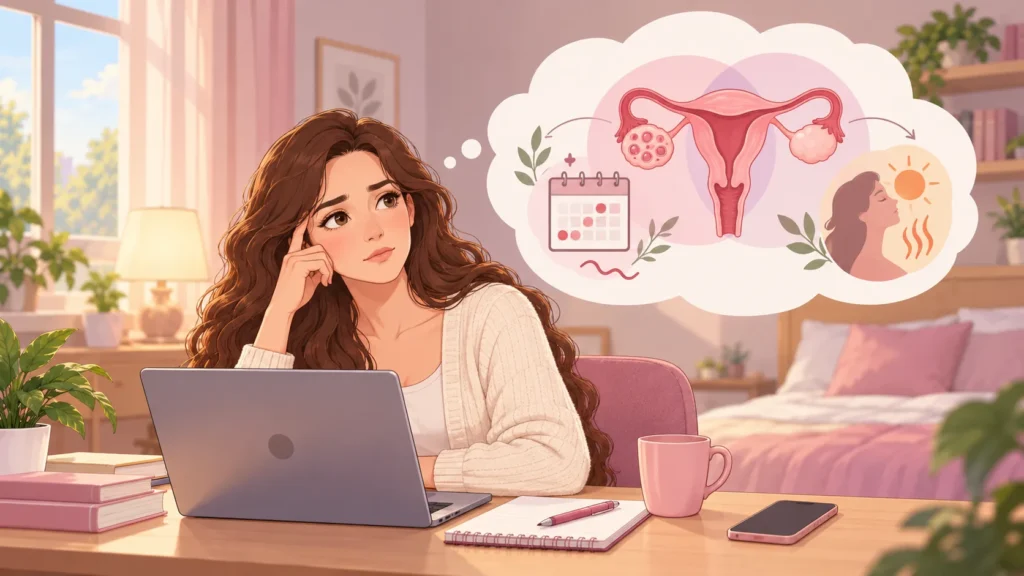
Yes, you can have polycystic ovary syndrome (PCOS) and enter perimenopause. The two conditions affect different aspects of reproductive health, but some of their symptoms overlap. That can make it difficult to understand why your periods have changed, why your hair is thinning, or why you suddenly experience hot flashes after years of living with PCOS.
PCOS is a hormonal condition that can affect ovulation, androgen levels, and metabolic health. Perimenopause is the transition leading up to menopause, when ovarian function changes and menstrual cycles become less predictable. Although the timing varies, this transition commonly occurs during the 40s.
Having PCOS does not prevent you from experiencing perimenopause. It also does not mean that every new symptom is caused by changing menopause-related hormones.
Your menstrual history is particularly important. If irregular periods have been part of your life for years, it may be harder to recognise when a new pattern begins. Hot flashes, night sweats, or changes to previously predictable periods may offer additional clues, but symptoms alone cannot establish the cause.
Understanding PCOS and perimenopause starts with looking at what has changed, what has remained the same, and whether another health condition could explain your symptoms.
How Does PCOS Change During Perimenopause?
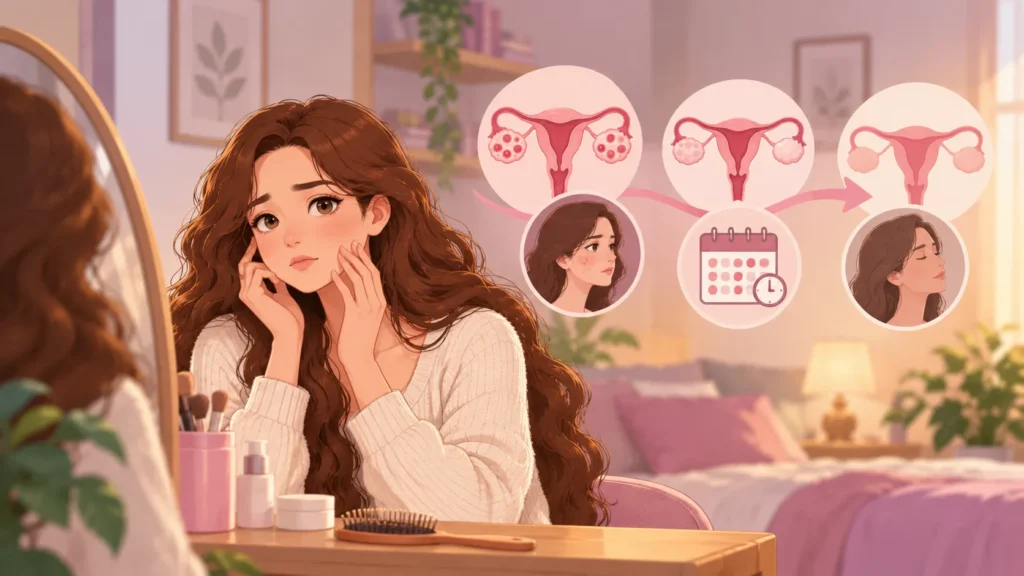
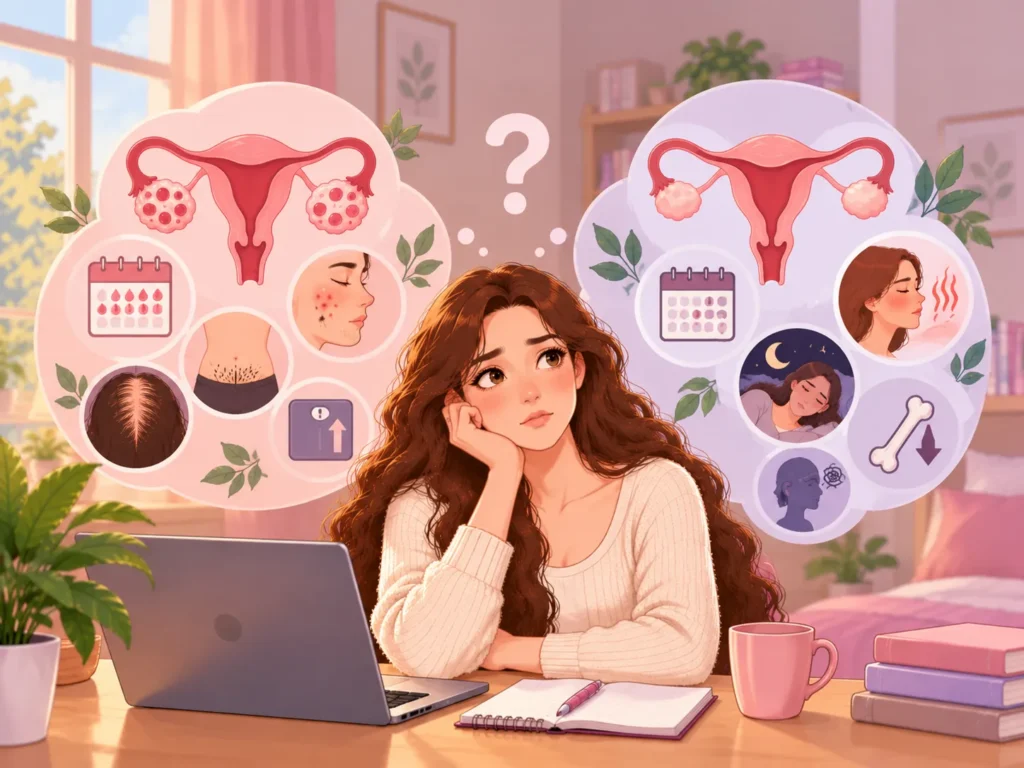
PCOS does not look exactly the same in everyone, and its symptoms can change over time. Some people notice more regular periods as they get older, while others continue to experience irregular cycles, unwanted facial hair, acne, or scalp hair thinning.
Age-related changes in ovarian function can affect menstrual patterns in people with PCOS. Research suggests that cycle irregularity may decrease for some individuals as they move through adulthood. However, this does not mean that PCOS has disappeared or that everyone’s symptoms will improve.
The 2023 international evidence-based PCOS guideline recognises PCOS as a condition whose features may remain relevant after reproductive life, even when symptoms change. You can also read our guide on whether PCOS can be cured to understand the difference between managing symptoms and the condition itself.
Why can periods become more regular?
You might expect your periods to become increasingly irregular as menopause approaches. However, menstrual cycles in people with PCOS do not always follow that pattern.
Some people who previously had long gaps between periods find that their cycles become more regular in their 30s or 40s. Age-related changes in ovarian function may contribute to this shift. Others continue to have infrequent or unpredictable periods.
More regular bleeding does not necessarily mean that ovulation is occurring consistently or that PCOS has resolved. Hormonal contraception and other treatments can also influence bleeding patterns.
If your periods change substantially, consider the broader pattern rather than assuming that age explains everything.
What happens to PCOS symptoms as menopause approaches?
Some androgen-related symptoms, including acne and excess facial or body hair, may become less noticeable with age. Others, such as unwanted facial hair or scalp hair thinning, can persist.
Perimenopause can introduce a different set of concerns, including hot flashes, night sweats, sleep disruption, and vaginal dryness. These symptoms may occur alongside existing PCOS symptoms, making it difficult to identify the cause of each change.
PCOS is also associated with metabolic concerns, including an increased risk of impaired glucose regulation and type 2 diabetes. These risks remain relevant in midlife, even if menstrual symptoms improve.
The most useful approach is to assess your current symptoms and long-term health needs separately instead of treating every change as part of one hormonal condition.
PCOS and Perimenopause Symptoms: What Should You Look For?
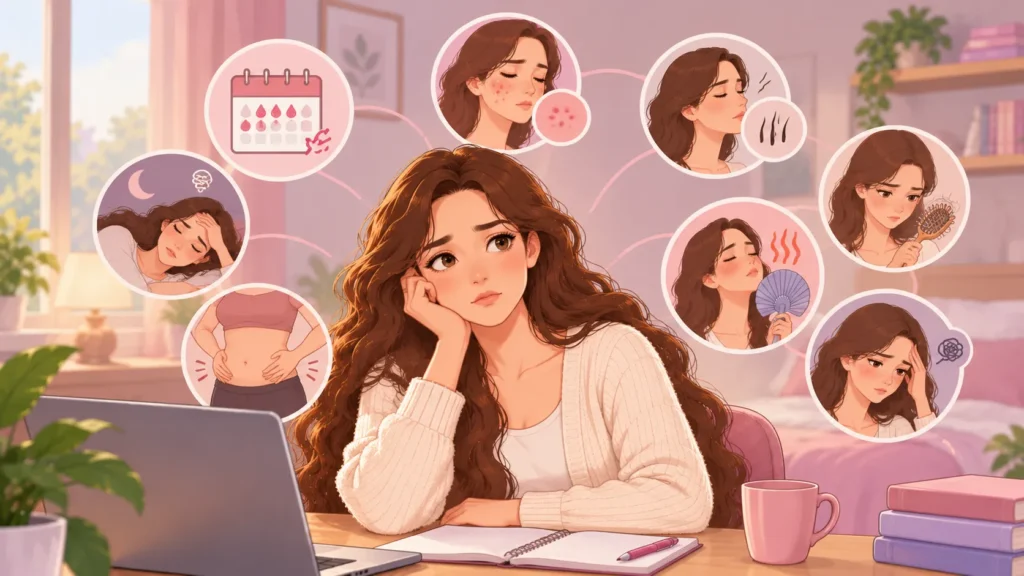
The symptoms of PCOS and perimenopause can overlap, but the pattern and timing of those symptoms often provide useful context.
Changes in menstrual cycles. PCOS commonly causes irregular or infrequent periods because ovulation may not occur regularly. During perimenopause, someone whose periods were previously predictable may notice changes in cycle length, bleeding, or the interval between periods. These patterns can overlap, so a change in bleeding should not automatically be attributed to either condition. Understanding the phases of the menstrual cycle can help explain how changes in ovulation affect cycle timing.
Hair growth, acne, and thinning hair. PCOS can cause excess coarse facial or body hair, acne, and scalp hair thinning associated with androgen effects. Some of these symptoms can persist into midlife. Hair thinning can also occur for other reasons, including thyroid conditions, nutritional deficiencies, medication effects, and age-related changes. Rapid or marked changes in hair growth deserve medical assessment.
Hot flashes and night sweats. These are commonly associated with the menopause transition rather than being defining features of PCOS. If you experience sudden episodes of warmth, flushing, or sweating at night, especially alongside changes in your menstrual cycle, perimenopause may be one possible explanation.
Sleep and mood changes. Sleep difficulties, anxiety, low mood, and reduced energy can occur during perimenopause. People with PCOS can also experience psychological and sleep-related concerns. Persistent fatigue, particularly when accompanied by daytime sleepiness or unrefreshing sleep, may deserve investigation for conditions such as anaemia, thyroid disorders, or sleep apnoea. If tiredness is one of your main concerns, our article on whether PCOS can make you tired explores other possible explanations and when to seek medical advice.
Changes in weight and metabolic health. Body composition can change during midlife for several reasons, including age, activity levels, sleep, medication, and hormonal changes. PCOS is associated with metabolic risk, but weight alone cannot diagnose insulin resistance or indicate whether the condition is well managed.
Vaginal dryness and discomfort. Vaginal dryness and discomfort during sex can occur as estrogen levels change during the menopause transition. These are not defining PCOS symptoms. A healthcare professional can discuss suitable treatments if they affect your comfort or quality of life.
The NHS guide to menopause and perimenopause symptoms explains the range of changes that can occur during this transition.
PCOS vs. Perimenopause: A Symptom Comparison
The following table can help you organise what you are experiencing. It is a guide to common patterns, not a diagnostic test.
| Feature | More commonly associated with PCOS | More commonly associated with perimenopause |
|---|---|---|
| Menstrual pattern | Long-standing irregular or infrequent periods | New changes in previously predictable cycles |
| Facial or body hair | Excess coarse hair related to androgen effects | May change with age, but not a defining feature |
| Acne | Can be associated with androgen-related effects | May occur, but has several possible causes |
| Scalp hair thinning | Can be related to androgen effects | Can occur during midlife for several reasons |
| Hot flashes and night sweats | Not defining features of PCOS | Common symptoms of the menopause transition |
| Sleep changes | May occur alongside other health conditions | May be related to night sweats or other symptoms |
| Vaginal dryness | Not a defining PCOS symptom | Can occur as estrogen levels change |
| Metabolic health | Increased risk of impaired glucose regulation and type 2 diabetes | Ongoing attention to general metabolic health remains important |
One person may experience features from both columns. For example, someone with PCOS may have a long history of irregular periods and later begin experiencing night sweats. Rather than deciding which condition explains everything, a healthcare professional can assess each symptom in context.
How Are PCOS and Perimenopause Diagnosed?
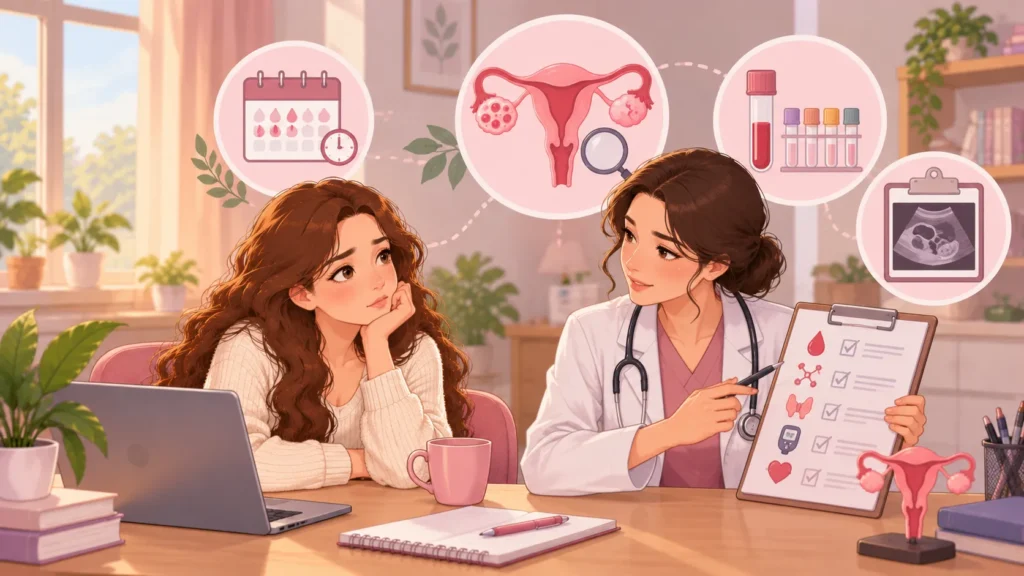
There is no single test that distinguishes PCOS from perimenopause in every situation. Assessment usually begins with your age, previous menstrual patterns, symptoms, medical history, and any medicines or hormonal contraception you use.
If you have already been diagnosed with PCOS, sharing that history can help your clinician interpret new symptoms. If you have never received a diagnosis, they may consider whether your symptoms fit established PCOS criteria and whether another condition could explain them.
Do you need hormone testing?
Not necessarily. For otherwise healthy people aged 45 or older with typical menopause-related symptoms, clinicians can often identify perimenopause or menopause from symptoms and menstrual history without routine hormone testing. Hormonal contraception can make this assessment more difficult because it may alter or stop bleeding.
Testing may be appropriate for younger people, particularly when early menopause is suspected, or when symptoms suggest another condition. The right approach depends on the circumstances.
For PCOS, a clinician may consider tests for glucose regulation, cholesterol, blood pressure, androgen levels, or other possible causes of symptoms. The choice depends on your history and clinical findings. There is no universal panel that everyone needs.
The NICE menopause guideline provides recommendations on identifying menopause and deciding when testing is appropriate.
When should you seek medical advice?
Arrange an appointment if your periods change significantly, your symptoms interfere with everyday life, you develop persistent fatigue, or unwanted hair growth or hair loss becomes more pronounced.
If you are unsure whether a delayed period falls within your usual pattern, our guide to how late a period can be explains common cycle variations and when a missed period should be assessed.
Very long gaps between periods also deserve attention in someone with PCOS. Your clinician can discuss whether treatment is needed to protect the lining of the uterus and whether additional investigations are appropriate.
Any vaginal bleeding after menopause needs medical assessment. Menopause is generally identified after 12 consecutive months without a period when other causes have been excluded and hormonal contraception is not masking the pattern. Bleeding after this point should be checked, even if it happens only once or consists of light spotting. See the NHS advice on postmenopausal bleeding.
Managing PCOS and Perimenopause Together
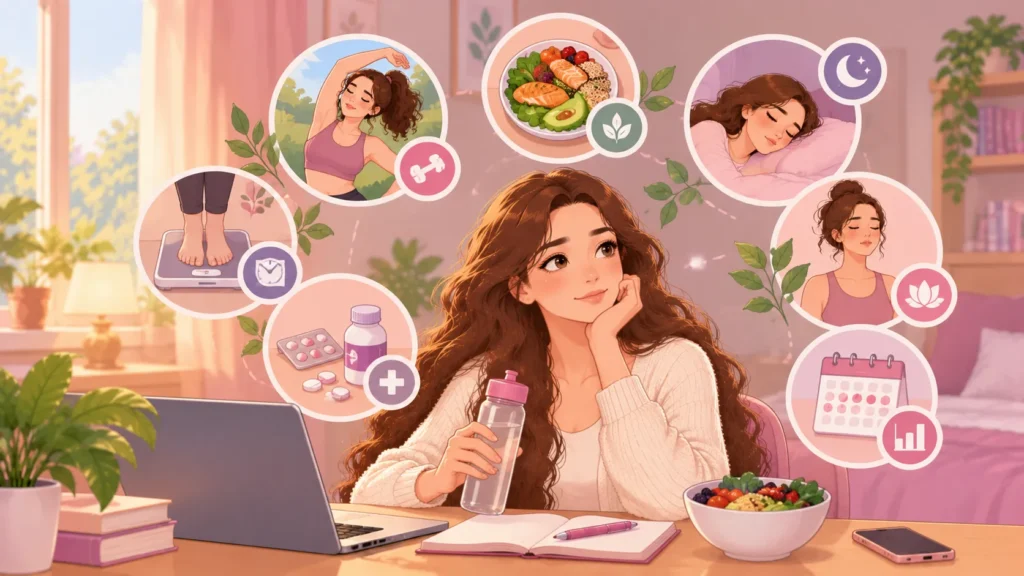
There is no single treatment plan for everyone experiencing PCOS during perimenopause. Your symptoms, medical history, pregnancy plans, and long-term health needs all influence which options may be appropriate.
Support your long-term health
Regular physical activity, balanced meals, adequate sleep, and avoiding smoking can support general health. You do not need an extreme diet or a demanding exercise routine. A sustainable approach is often more useful than a restrictive plan that is difficult to maintain.
People with PCOS should also discuss appropriate metabolic monitoring with their healthcare professional. This may include glucose assessment, cholesterol checks, and blood pressure measurement. The timing and type of assessment depend on individual risk and clinical guidance.
Improving health does not require making weight the only measure of progress. Sleep, energy, blood pressure, glucose regulation, and quality of life are also important.
Discuss treatment for symptoms that bother you
If you experience troublesome hot flashes, irregular bleeding, acne, unwanted hair growth, or sleep problems, ask about the options available for your particular symptoms.
Treatments used for PCOS-related concerns differ from those used for menopause symptoms. Hormonal medication, for example, may be considered for certain PCOS symptoms, while menopausal hormone therapy may help suitable candidates with troublesome menopause-related symptoms. These treatments have different indications and risks, so a healthcare professional should help you weigh the options.
Be cautious with supplements marketed for hormonal balance or metabolism. Evidence varies between products, and supplements can interact with medication. A product described as “natural” is not automatically effective or safe for everyone.
Keep a record of your symptoms
You do not need an elaborate tracking system. Note when your periods occur, how your bleeding changes, whether you experience hot flashes or night sweats, and how your sleep and mood are affected. Include any medication changes and symptoms that are new or getting worse.
This record can help a clinician distinguish a long-standing PCOS pattern from changes that have developed more recently.
If pregnancy is possible, remember that perimenopause does not necessarily mean fertility has ended. Discuss contraception with your healthcare professional if you do not wish to become pregnant. If pregnancy is part of your plans, our guide to pregnancy considerations for people with PCOS at different ages provides additional context.
Frequently Asked Questions About PCOS and Perimenopause
1. Does PCOS go away after menopause?
↓2. Can PCOS cause early menopause?
↓3. How can I tell whether my symptoms are PCOS or perimenopause?
↓4. Why might my periods become more regular in my 40s if I have PCOS?
↓5. What tests might a healthcare professional consider if I have PCOS and suspect perimenopause?
↓The Takeaway
PCOS and perimenopause can occur together, and symptoms sometimes overlap. Menstrual changes, hair symptoms, sleep difficulties, and metabolic concerns may have more than one explanation. Looking at your history and the timing of new symptoms is more useful than assuming that one condition explains everything.
If symptoms are persistent, unusual, or affecting your daily life, speak with a healthcare professional. With an appropriate assessment and a plan tailored to your needs, you can address current symptoms while continuing to look after your long-term health.
Medical Disclaimer: This article is for informational purposes only and does not replace professional medical advice, diagnosis, or treatment. Consult a qualified healthcare professional about your symptoms or treatment options.
References & Further Reading
- NHS Symptoms: https://www.nhs.uk/conditions/menopause-and-perimenopause/symptoms/
- NHS Overview: https://www.nhs.uk/conditions/menopause-and-perimenopause/what-are-menopause-and-perimenopause/
- PubMed Central: https://pmc.ncbi.nlm.nih.gov/articles/PMC10505534/
- NICE Guidance: https://www.nice.org.uk/guidance/ng23/chapter/Recommendations
- ACOG: https://www.acog.org/womens-health/experts-and-stories/ask-acog/do-i-need-to-have-testing-of-my-hormone-levels-during-perimenopause
- NHS Post-menopausal Bleeding: https://www.nhs.uk/symptoms/post-menopausal-bleeding/