If you’ve ever wondered why your energy, mood, skin, or appetite seem to shift throughout the month, the answer lies in the menstrual cycle phases. The menstrual cycle is far more than “getting your period” — it’s a continuous, four-part hormonal loop that your body repeats roughly every month from puberty until menopause. Each phase has a specific biological job, driven by a rising and falling mix of hormones, and each one can bring its own set of physical and emotional changes.
Understanding these phases isn’t just interesting trivia. It can help you predict your period, recognize your most fertile days, make sense of PMS symptoms, plan workouts and rest around your energy levels, and know when something about your cycle might be worth mentioning to a doctor. This guide walks through each of the four menstrual cycle phases in detail, the hormones behind them, and practical ways to use that knowledge in everyday life.
What Is the Menstrual Cycle?
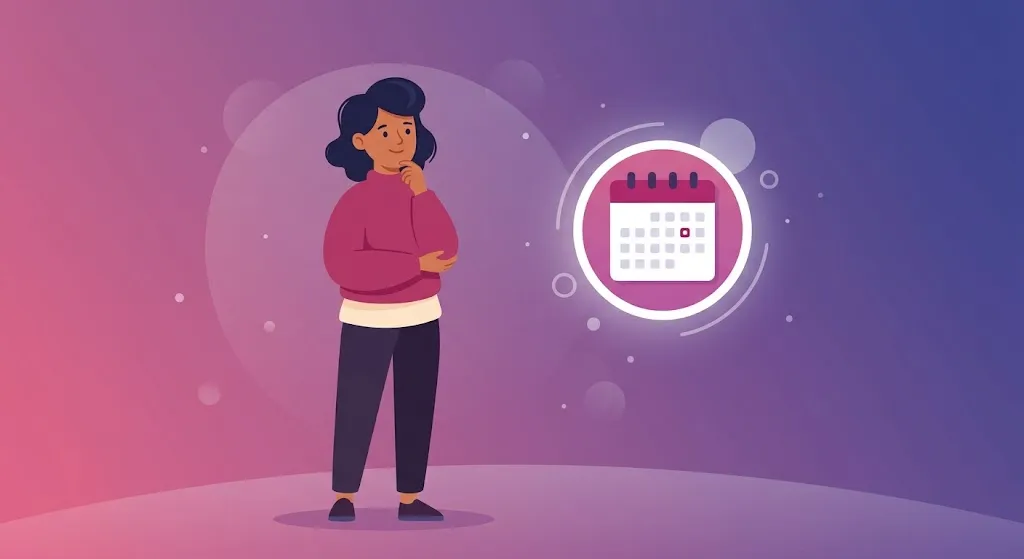
The menstrual cycle is the recurring process by which the body prepares for a possible pregnancy each month. It’s counted from the first day of one period to the first day of the next, and while 28 days is often cited as the “average,” a healthy cycle can range anywhere from about 21 to 35 days depending on the person.
Physiologically, the cycle is really two overlapping cycles happening at once: the ovarian cycle, which governs the maturing and release of an egg, and the endometrial cycle, which governs the buildup and shedding of the uterine lining. Doctors often simplify this into four practical menstrual cycle phases — menstrual, follicular, ovulation, and luteal — because that’s the easiest way to describe what’s actually happening in the body at any given point.
The Hormones Behind Your Cycle
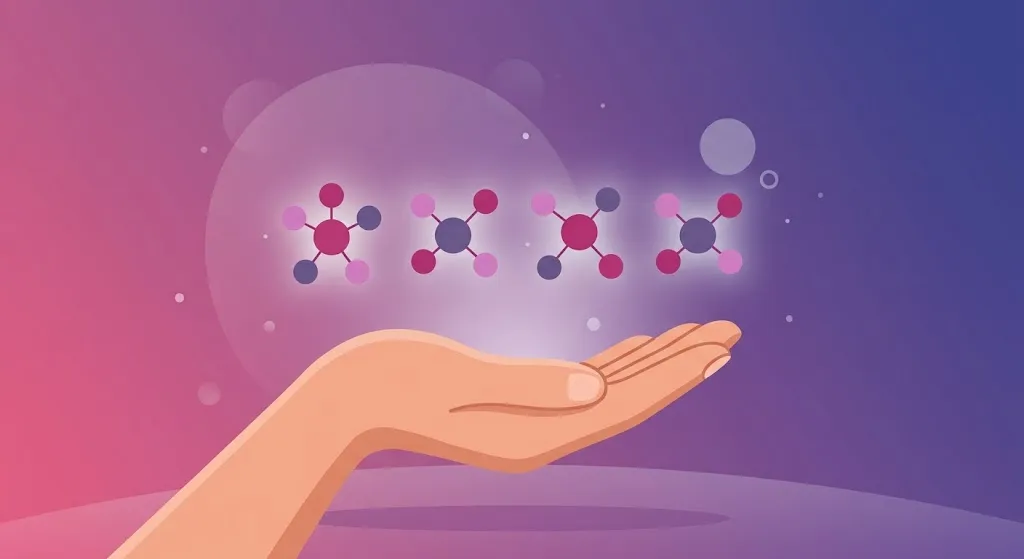
None of the changes in the menstrual cycle happen randomly. They’re orchestrated by a communication loop between the brain and the ovaries known as the hypothalamic-pituitary-ovarian (HPO) axis. Four hormones do most of the work:
- Follicle-stimulating hormone (FSH): Released by the pituitary gland, it tells the ovaries to start growing follicles, each containing an immature egg.
- Estrogen: Produced by the growing follicles, it thickens the uterine lining and eventually triggers the LH surge that causes ovulation.
- Luteinizing hormone (LH): A sudden surge of LH is what actually causes the mature egg to be released from the ovary.
- Progesterone: Released by the corpus luteum after ovulation, it stabilizes the uterine lining and prepares the body for a possible pregnancy. If pregnancy doesn’t happen, progesterone drops and the cycle starts over.
Keeping these four hormones in mind makes it much easier to understand why each of the menstrual cycle phases feels the way it does.
Phase 1: Menstrual Phase
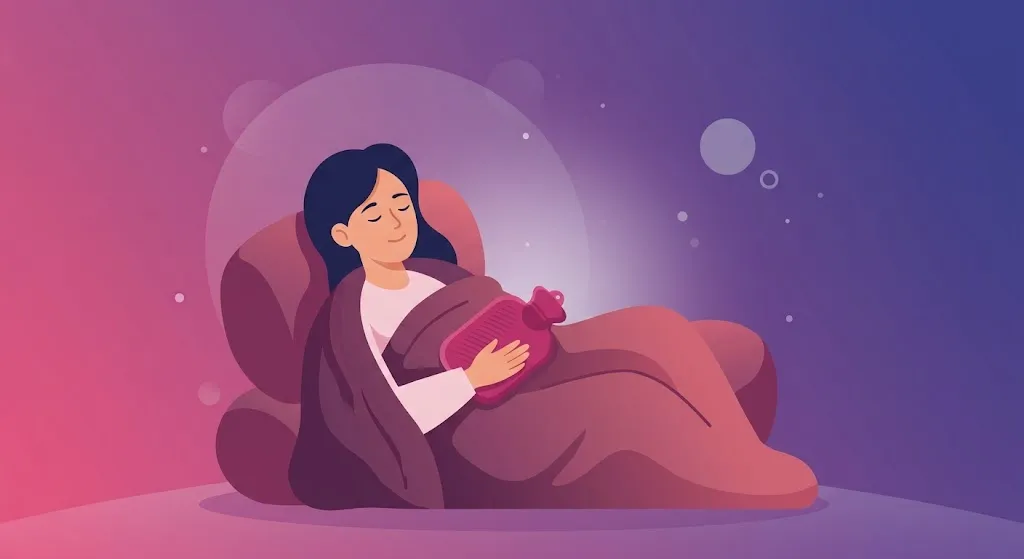
The menstrual phase is Day 1 of the cycle — the day bleeding starts — and typically lasts around 3 to 7 days, though this varies from person to person.
What’s happening internally: At the end of the previous cycle, if the released egg wasn’t fertilized, the corpus luteum breaks down and both estrogen and progesterone drop sharply. This hormonal drop signals the uterus to shed the thickened lining it built up in preparation for a pregnancy that didn’t occur. That shedding — a mix of blood, tissue, and mucus — is your period.
Common physical and emotional experiences:
- Cramping in the lower abdomen, caused by the uterus contracting to help expel its lining
- Fatigue or low energy, partly linked to the drop in hormones
- Headaches, bloating, or lower back pain for some people
- Mood changes, which may carry over from the premenstrual phase before tapering off
Because hormone levels are at their lowest point during this phase, many people notice this is when they feel the most drained — which is worth keeping in mind when planning demanding tasks or workouts.
Phase 2: Follicular Phase
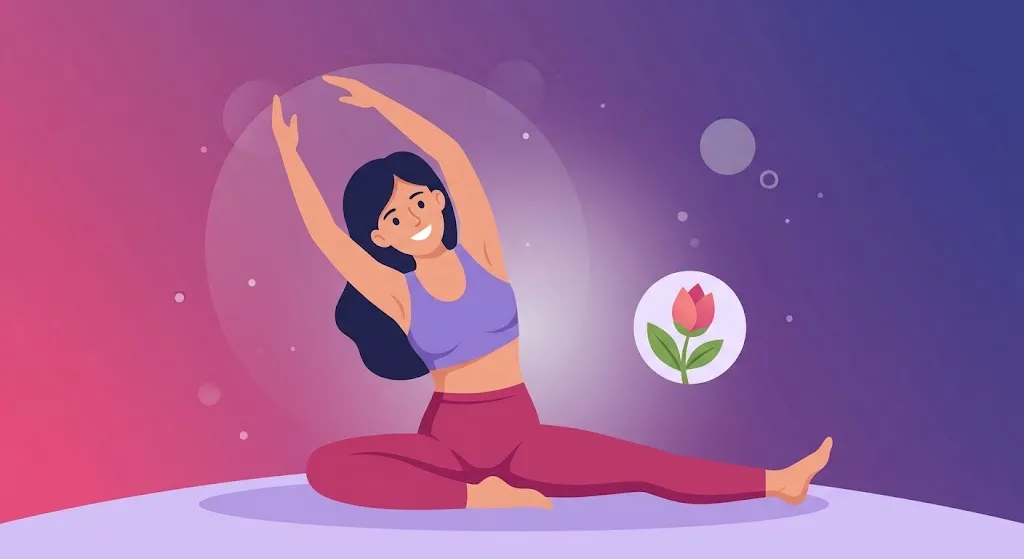
The follicular phase technically begins on Day 1 of the cycle (the same day as your period) and continues until ovulation, so it overlaps with the menstrual phase for the first several days. Overall, it’s usually the longest of the menstrual cycle phases, often lasting anywhere from 10 to 21 days depending on the individual.
What’s happening internally: As your period is ending, FSH is stimulating a group of follicles in the ovaries to grow. Typically only one follicle becomes “dominant” and continues developing, while the others recede. As this dominant follicle matures, it produces increasing amounts of estrogen, which does two important things: it rebuilds the uterine lining, and it eventually reaches a peak that triggers the LH surge leading into ovulation.
Common physical and emotional experiences:
- Rising energy levels as estrogen climbs
- Improved mood, focus, and motivation for many people
- Clearer skin for some, as hormone levels stabilize after the period
- Increased interest in physical activity or social plans
This phase is often described as the “rebuilding” stretch of the cycle — the body is recovering from menstruation and actively gearing up for its most fertile window.
Phase 3: Ovulation Phase
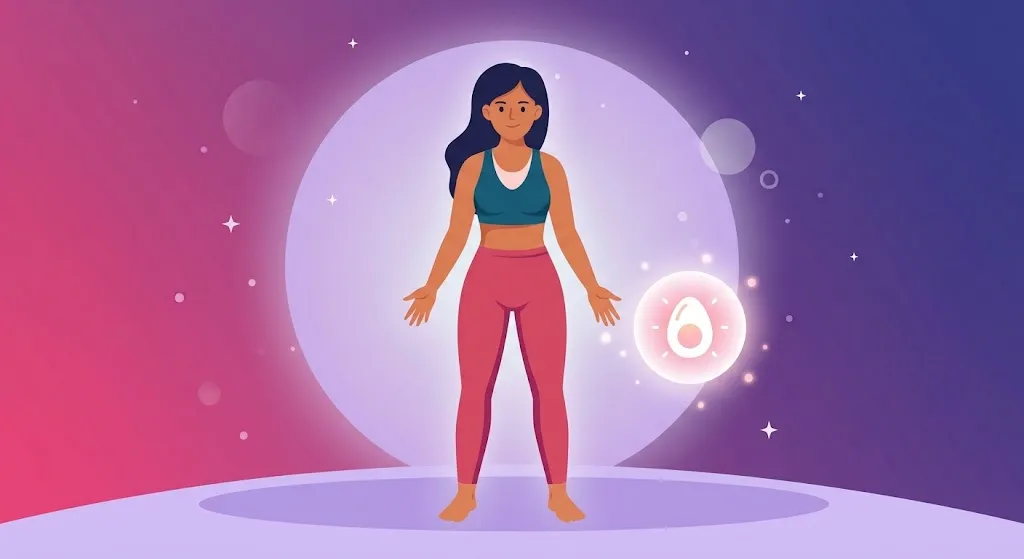
Ovulation is the shortest of the four menstrual cycle phases, generally lasting only 24 to 48 hours, though the body’s buildup toward it (via rising estrogen) takes place over the preceding days. In a textbook 28-day cycle, ovulation happens around Day 14, but the actual timing depends entirely on how long your personal follicular phase runs.
What’s happening internally: The sharp rise in estrogen from the maturing follicle triggers a surge in luteinizing hormone (LH). This LH surge causes the dominant follicle to rupture and release its mature egg into the fallopian tube, where it can survive for roughly 12 to 24 hours. If sperm is present in the fallopian tube during this window, fertilization can occur.
Common physical and emotional experiences:
- A slight one-sided pelvic twinge or ache, sometimes called “mittelschmerz”
- Changes in cervical mucus, which typically becomes clearer, thinner, and more stretchy
- A small rise in basal body temperature (about 0.5–1°F) shortly after ovulation, caused by rising progesterone
- A noticeable boost in energy and libido for some people
Because sperm can survive in the reproductive tract for several days, the fertile window actually starts a few days before ovulation and closes shortly after the egg is released — which is why the days leading up to ovulation, not just ovulation day itself, matter most for anyone tracking fertility.
Phase 4: Luteal Phase
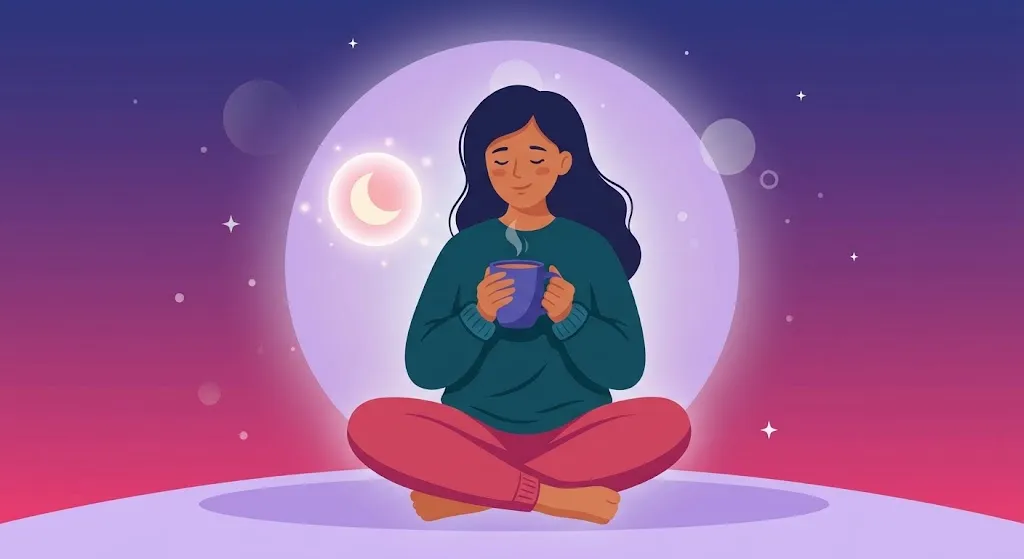
The luteal phase begins immediately after ovulation and lasts until the next period starts. It’s typically more consistent in length than the follicular phase, usually running about 12 to 14 days, though some variation is normal.
What’s happening internally: After releasing its egg, the ruptured follicle transforms into a temporary hormone-producing structure called the corpus luteum. This structure secretes progesterone (along with some estrogen), which stabilizes and further thickens the uterine lining in case a fertilized egg implants. If implantation doesn’t happen, the corpus luteum breaks down after about 10 to 14 days, hormone levels fall, and the drop in progesterone and estrogen triggers the start of the next menstrual phase — bringing the cycle full circle.
Common physical and emotional experiences:
- Premenstrual symptoms (PMS) such as bloating, breast tenderness, and irritability, especially in the days right before the period
- Food cravings, particularly for carbohydrates or sweets
- Lower energy and a more introspective or sensitive mood as the phase progresses
- Sleep disturbances for some people, especially closer to the next period
If PMS symptoms are severe enough to disrupt daily life — a pattern sometimes referred to as premenstrual dysphoric disorder (PMDD) — that’s a good reason to bring it up with a healthcare provider rather than just “pushing through” every month.
A Quick Phase-by-Phase Snapshot
| Phase | Typical Timing (28-day cycle) | Dominant Hormone | Main Event |
|---|---|---|---|
| Menstrual | Days 1–5 | Estrogen & progesterone at their lowest | Uterine lining sheds |
| Follicular | Days 1–13 | Rising estrogen, active FSH | Follicles mature in the ovary |
| Ovulation | Around Day 14 | LH surge | Egg is released |
| Luteal | Days 15–28 | Progesterone | Uterine lining prepares for possible pregnancy |
Keep in mind this table reflects a “typical” 28-day cycle used for teaching purposes — your own timing may look different, and that’s usually completely normal.
Why Cycle Length Isn’t Always 28 Days
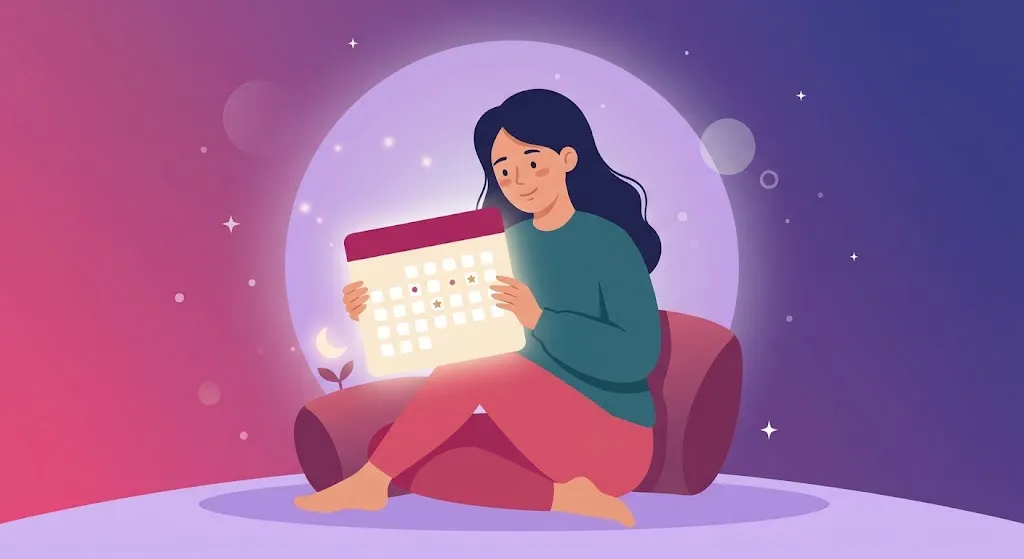
The 28-day cycle gets used as shorthand because it’s easy to teach, but real-world cycles vary a lot. Medically, cycles anywhere from about 21 to 35 days are generally considered within a normal range. What varies most between individuals — and even between cycles for the same person — is the length of the follicular phase; the luteal phase tends to stay closer to 12–14 days regardless of overall cycle length.
Factors that can shift the timing of your menstrual cycle phases include:
- Stress and sleep quality
- Significant weight changes or intense exercise
- Travel and changes in routine
- Certain medical conditions, such as thyroid disorders or polycystic ovary syndrome (PCOS)
- Hormonal birth control, which can override the natural cycle entirely
- Approaching perimenopause
None of this means your cycle is “wrong” if it doesn’t match the 28-day textbook version — it simply means your body has its own rhythm worth getting familiar with.
How Each Phase Can Affect Energy, Mood, and Fitness
Because hormone levels shift so much across the menstrual cycle phases, many people notice patterns in how they feel physically and mentally from week to week:
- Menstrual phase: Energy tends to be lowest; gentler movement like walking, stretching, or yoga may feel better than high-intensity training.
- Follicular phase: Rising estrogen is often linked with more energy, better mood, and improved endurance — a good window for higher-intensity workouts or tackling demanding projects.
- Ovulation phase: Energy and confidence often peak briefly around ovulation.
- Luteal phase: As progesterone rises and then falls, energy typically declines, and some people notice a need for more recovery time, more sleep, or extra patience with themselves.
This pattern is sometimes referred to as “cycle syncing.” It isn’t a strict rulebook, and individual experiences vary quite a bit, but many people find it a genuinely useful framework for planning workouts, big meetings, or rest days around their natural rhythm rather than fighting against it.
Why Tracking Your Cycle Matters
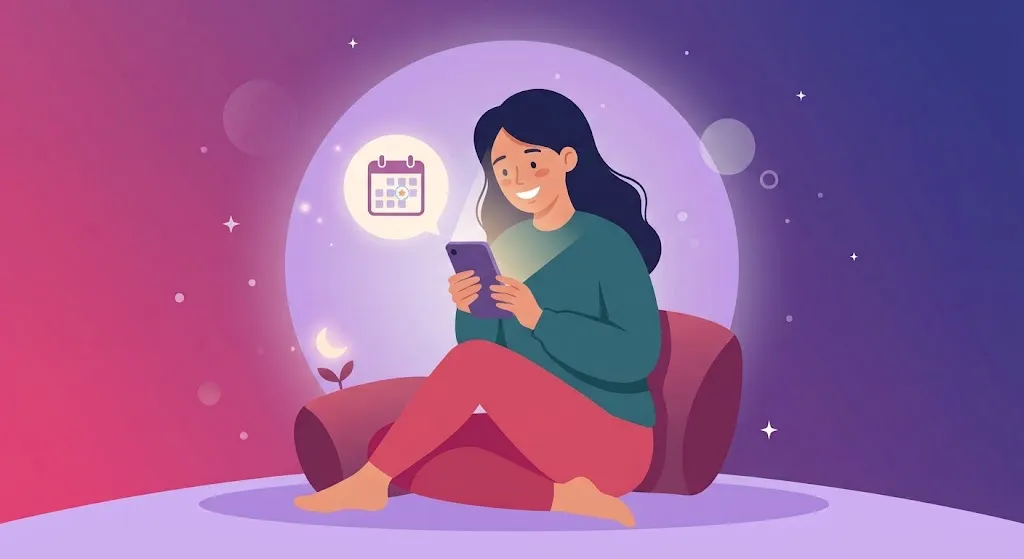
Once you understand the four menstrual cycle phases, tracking them turns that knowledge into something practical. Logging your period start date, cycle length, and any symptoms over a few months can help you:
- Predict your next period so you’re not caught off guard
- Identify your fertile window, whether you’re trying to conceive or avoid pregnancy
- Spot patterns in mood, energy, skin, or appetite tied to specific phases
- Notice irregularities early — such as unusually long, short, heavy, or painful cycles — that are worth discussing with a doctor
- Understand your body better overall, rather than being caught off guard by symptoms each month
Most cycle-tracking apps ask you to log your period dates and any symptoms, then use that history to estimate which phase you’re likely in and predict your next period and fertile window. The more consistently you log, the more accurate those predictions tend to become, since your own cycle history is a better guide than a generic 28-day average.
When to Talk to a Doctor
While a lot of variation in the menstrual cycle is completely normal, certain signs are worth bringing to a healthcare provider:
- Cycles that are consistently shorter than 21 days or longer than 35 days
- Periods that last longer than 7 days or are unusually heavy
- Severe pain that interferes with daily activities
- Missed periods that aren’t explained by pregnancy, breastfeeding, or menopause
- Bleeding between periods
- PMS or mood symptoms severe enough to affect work, relationships, or daily functioning
A doctor can help determine whether these patterns are linked to something like PCOS, thyroid issues, fibroids, or another underlying condition — and, importantly, most causes of irregular cycles are manageable once identified.
Frequently Asked Questions
1. How many menstrual cycle phases are there?
↑2. Which phase is the “fertile window”?
↓3. Why does the follicular phase vary so much in length, but not the luteal phase?
↓4. Can menstrual cycle phases shift from month to month?
↓5. Does hormonal birth control change these phases?
↓6. Should I see a doctor about my cycle?
↓Learn More From These Trusted Sources
- Kaiser Permanente — Phases of the Menstrual Cycle
Kaiser Permanente – Phases of the Menstrual Cycle - Cleveland Clinic — Menstrual Cycle (Normal Menstruation): Overview & Phases
Cleveland Clinic – Menstrual Cycle - NCBI (StatPearls) — Physiology, Menstrual Cycle
NCBI – Physiology, Menstrual Cycle - UCSF Center for Reproductive Health — Normal Menstrual Cycle
UCSF – Normal Menstrual Cycle