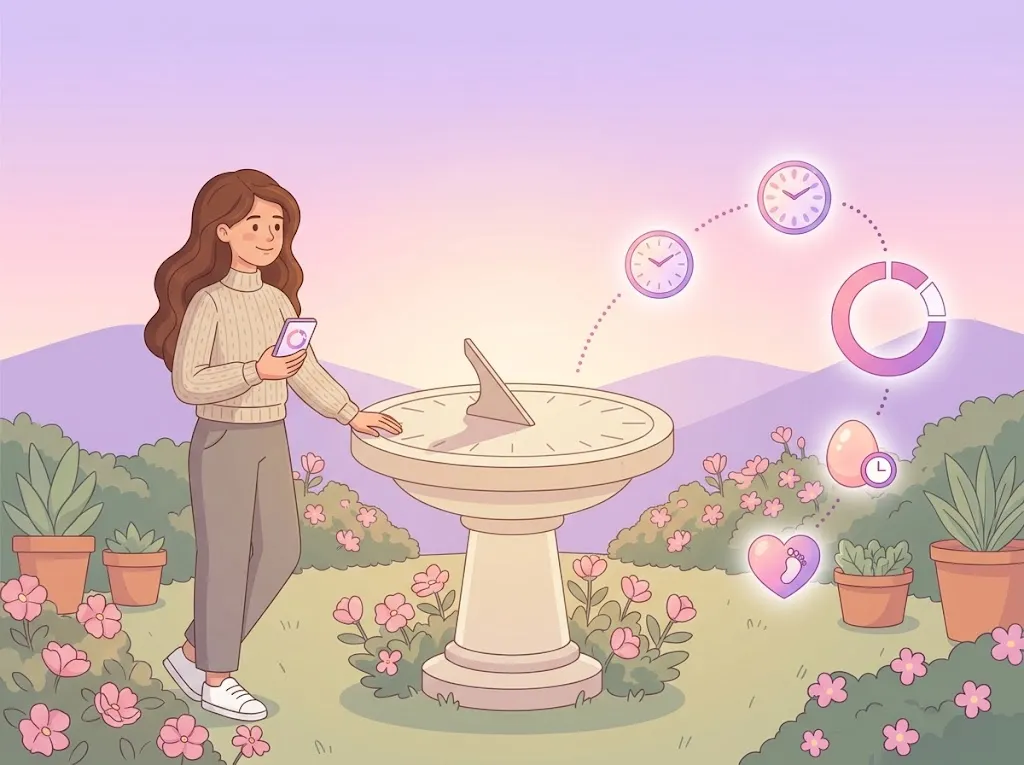
The best age to get pregnant with PCOS is the same window that suits most women: your mid 20s to early 30s, when fertility peaks. PCOS adds one complication. You may ovulate less often, so conception can take longer, and starting before 35 leaves time to treat ovulation if you need help. Women with PCOS have healthy babies in their late 30s, though the odds fall each year after about 32.
PCOS, short for polycystic ovary syndrome, now goes by a new name, PMOS. For the full picture on fertility with this condition, read our guide on whether you can get pregnant with PMOS. This article sticks to one question: timing.
Best Age to Get Pregnant With PCOS: The Short Answer
The American College of Obstetricians and Gynecologists and the American Society for Reproductive Medicine report that female fertility starts to drop at about 32 and drops faster after 37 (Committee Opinion 589). PCOS doesn’t pause that clock. The table below shows what each age band means for you.
| Your age | What happens to fertility | What to do with PCOS |
|---|---|---|
| 20 to 29 | Highest natural fertility and the best egg quality | Confirm whether you ovulate and see a doctor early if periods are irregular |
| 30 to 32 | Still high; a gradual drop starts around 32 | Get a sugar test and cycle check before trying |
| 33 to 37 | Gradual decline continues | From 35, see a doctor after 6 months of trying, sooner with irregular cycles |
| 38 to 40 | Faster decline after 37 | Book a fertility appointment as soon as you start trying |
| Over 40 | Lower chance each month and a higher risk of pregnancy loss | Ask for immediate evaluation and discuss IVF at the first visit |
Treat this table as a starting map for the best age to get pregnant with PCOS, then adjust it for your own cycle. Two women with PCOS can sit in the same row and face different odds. A 34 year old who ovulates most months may conceive faster than a 27 year old who gets three periods a year. Age sets the background, and your ovulation pattern decides much of the rest. Our guide to the signs of ovulation shows you how to check yours.
Why PCOS Changes the Fertility Clock
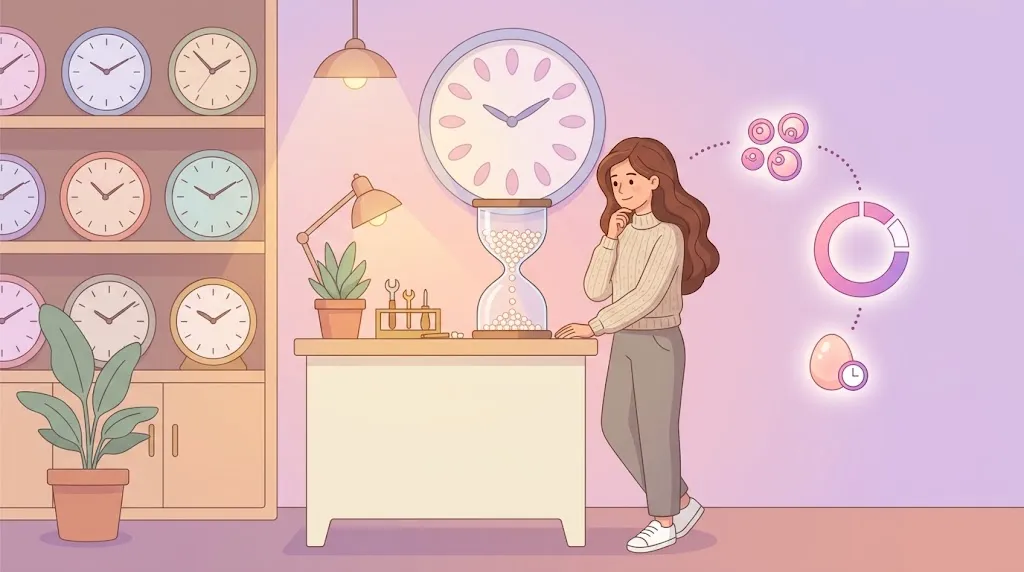
Women with PCOS tend to have more small follicles on their ovaries and a higher AMH (anti Müllerian hormone) level, the blood test doctors use to estimate egg supply. A larger supply sounds like extra time. Some researchers think the ovarian reserve in PCOS may run down at a slower pace, though that evidence is still early.
Egg quality follows a different rule. Quality depends on your age, and a 38 year old egg carries the same age related risks whether or not its owner has PCOS. A busy ovary on the ultrasound won’t change that.
Your main hurdle in your 20s is ovulation. During the follicular phase, raised androgens and insulin resistance can stop the leading follicle from finishing its growth, so no egg comes out that month. Doctors call this anovulation. You might ovulate late in your cycle or skip whole months. At 27, a few lost months cost little. At 37, each one costs more.
Women in online PCOS groups ask the same thing again and again: do you become more fertile after 30? Some women notice their cycles settle as they get older, and a regular cycle makes ovulation easier to predict. Your eggs keep ageing on the normal schedule, though, so a smoother cycle at 36 won’t give you the fertility of a 26 year old.
What the Research Says: Real Numbers by Age
Four pieces of research on PCOS fertility by age give you a clearer picture than any clinic advert.
Egg supply. Researchers at the Universities of St Andrews and Edinburgh built a model, published in PLoS One, estimating that the average woman has about 12 percent of her egg reserve left by 30 and about 3 percent by 40 (Wallace and Kelsey). They studied women in general, so read it as the general background curve.
Family size. In the Australian Longitudinal Study on Women’s Health, women aged 28 to 33 with PCOS had a similar number of children to women without it, though they used more fertility treatment (Joham et al., Human Reproduction 2014). The same team found that higher body weight, rather than PCOS itself, was linked to pregnancy loss, including miscarriage.
Delays. A 2025 follow up tracked women from that study to ages 43 to 48. Of the women with PCOS, 51 percent reported infertility, compared with 21 percent of women without it. They were more likely to have their first baby at an older maternal age, and 23 percent had no children, against 19 percent (Forslund et al., 2025).
Treatment. A large NEJM trial found that letrozole led to more live births than clomiphene in women with PCOS. The 2023 international PCOS guideline now names letrozole as the first medicine to try for ovulation.
Read side by side, these studies say you have a good chance of reaching the family size you want, but you may need treatment and extra months to get there. After 35, those extra months carry a higher price.
Getting Pregnant With PCOS in Your 20s, 30s and After 40

In your 20s, your eggs are at their best and your supply is at its largest. Your task is to find out whether you ovulate. If your periods come every 40 or 60 days, start tracking your cervical mucus and morning temperature now, and see a doctor once you start trying instead of waiting a year. Many women in Pakistan and India marry in their 20s and face questions from relatives within months. A diagnosis and a plan give you facts to answer with.
From 30 to 34, your odds stay good. Getting pregnant with PCOS after 30 is common, and many women conceive in this window. Decline begins around 32, so a year spent hoping irregular periods will sort themselves out costs more here than at 25. If you’re putting pregnancy off for study, work or marriage reasons, ask your doctor to check your AMH level and antral follicle count, and talk through egg freezing as one option.
From 35 to 39, ACOG advises an expedited fertility check after six months of trying. With PCOS and irregular cycles, book sooner. Letrozole remains the first step for most women, and IVF comes into the conversation earlier than it would at 28.
After 40, pregnancy with PCOS happens, both on its own and with IVF, but the chance per month drops and the risk of pregnancy loss rises with age. ACOG recommends immediate evaluation and treatment for women over 40. Ask about IVF at your first appointment instead of spending a year on tablets.
Families sometimes push for an early marriage once a girl gets a PCOS diagnosis. No medical guideline sets a marriage age for PCOS. Getting diagnosed and having your blood sugar checked before marriage is a more useful step, because you start married life with a plan.
How to Prepare at Any Age: A 12 Month Plan

Whatever the best age to get pregnant with PCOS turns out to be for your life, this preconception timeline gets your body ready for it. You can’t change your birth year, but you can change how prepared you are when you start trying.
Twelve months before trying, confirm the diagnosis and ask for an oral glucose tolerance test. The 2023 guideline recommends this sugar test for every woman with PCOS who plans a pregnancy, because insulin problems affect both ovulation and pregnancy. Get your blood pressure checked at the same visit.
Six months before, work on your habits. If you’re above a healthy weight, modest weight loss can bring back ovulation for some women. Steady meals, regular movement and sleep help your insulin work better, and stress can delay ovulation and your period. Review your regular medicines with a doctor. If you use a weight loss injection such as semaglutide, the manufacturer advises stopping it at least two months before you try to conceive.
Three months before, start folic acid. The guideline recommends a higher dose if your BMI is over 30, so ask your doctor which strength fits you. Begin logging period dates, mucus and morning temperature. MyOvly keeps that record on your phone, and your gynaecologist will want to see it.
Once you start trying, have sex every two or three days around the time you expect to ovulate. You can get pregnant on several days around ovulation, so you don’t need one perfect day. Our guides on how long ovulation lasts and how many days after your period you ovulate help with the timing.
If your tracking shows no ovulation after a few cycles, see your doctor. A progesterone blood test can confirm whether you ovulated, and letrozole is the usual next step.
When to See a Doctor: A Timeline by Age
The right time to book depends on your age and your cycle more than on how long you’ve been married.
| Your situation | When to book a doctor |
|---|---|
| Fewer than 8 periods a year, or none for 3 months | Now, before you start trying |
| Diagnosed with PCOS, any age | Before trying, for a sugar test and a treatment plan |
| Under 35 with regular cycles | After 12 months of trying (Mayo Clinic) |
| 35 to 39 | After 6 months of trying, or earlier if cycles are irregular |
| 40 or older | Straight away |
Take your husband along, or at least his details. A semen analysis belongs in a standard fertility check, and the cause of a delay often involves the man. If your period is late and the test is negative, our guides on why your period is late and a period late but not pregnant explain the common reasons. For a refresher on how the whole cycle fits together, see the menstrual cycle phases.
Frequently Asked Questions
1. Does PCOS mean poor egg quality?
↓2. Is PCOS a high risk pregnancy?
↓3. What are the first signs of pregnancy with PCOS?
↓4. What is the fastest way to get pregnant with PCOS?
↓5. How many eggs does a PCOS woman have?
↓6. At what age are 90% of eggs gone?
↓7. Do women with PCOS get more fertile after 30?
↓8. Can you get pregnant with PCOS after 40?
↓Conclusion: What This Means for You
The best age to get pregnant with PCOS is your mid 20s to early 30s, and the practical rule is to start early enough that you can fix ovulation before 35. In plain numbers, the best age to conceive with PCOS sits before 32, and the early 30s still leave you room to act. Your plan depends on where you are now.
If you’re in your 20s and trying, track your cycle from the first month and see a doctor early when periods are irregular. If you’re 30 to 34, get the sugar test and a cycle check before you start, so a delay doesn’t eat into your best years. If you’re 35 or older, book a fertility appointment within six months of trying, or straight away after 40. If you’re young, unmarried and recognise the symptoms, get a diagnosis now. You’ll walk into marriage with answers instead of guesses.
Medical disclaimer: This article is for general education only and is not a substitute for medical advice, diagnosis or treatment. Every woman with PCOS is different. Please speak with a doctor or a qualified healthcare provider about your symptoms, fertility plans and any treatment.
References & Further Reading
- ACOG and ASRM: Female Age Related Fertility Decline, Committee Opinion No. 589
- Human Reproduction (Joham et al., 2014): Contraception Use and Pregnancy Outcomes in Women With PCOS
- Contemporary OB/GYN (Forslund et al., 2025): PCOS Linked to Delayed Childbirth and Higher Infertility Rates
- University of Edinburgh (Wallace and Kelsey, PLoS One 2010): Study Tracks Speed of the Biological Clock
- International PCOS Guideline: International Evidence Based Guideline for PCOS (2023 Summary)
- New England Journal of Medicine: Letrozole versus Clomiphene for Infertility in the Polycystic Ovary Syndrome (2014)
- Cleveland Clinic: Polyendocrine Metabolic Ovarian Syndrome (PMOS)
- Mayo Clinic: Infertility: Symptoms and Causes