

The most reliable signs of ovulation are clear, stretchy discharge that looks like raw egg white, a positive ovulation (LH) test, and a small rise in your morning body temperature. Many women also notice a twinge on one side of the lower belly, a higher sex drive, or tender breasts around the middle of their cycle.
Your body does not send a text message on ovulation day, but it does leave clues. Once you learn to read the signs of ovulation, you can spot your most fertile days, plan a pregnancy with more confidence, or simply understand why you feel different from week to week.
Here are the 10 signs of ovulation we cover in this guide:
- Egg white cervical mucus
- A positive LH test
- A rise in basal body temperature
- Changes in cervix position
- Ovulation pain or cramps
- A higher sex drive
- Breast tenderness
- Light spotting
- Mild bloating
- Sharper sense of smell or taste
If you are still working out timing, start with our guide on how many days after your period you ovulate, then come back here to learn what your body feels like when it happens.
Signs of Ovulation at a Glance

Not all signs of ovulation mean the same thing. Some tell you ovulation is coming, one confirms it already happened, and the rest are helpful extras. This quick table shows the difference.
| Sign | When it shows up | How to check | How useful it is |
|---|---|---|---|
| Egg white mucus | A few days before ovulation | Look at discharge on toilet paper | Very useful |
| Positive LH test | About 1 to 1.5 days before | Urine test strip | Very useful |
| Temperature rise | After ovulation | Thermometer each morning | Confirms it happened |
| High, soft cervix | Around ovulation | Gentle self check | Useful with practice |
| One sided pain | Around ovulation | Notice the twinge | Supporting sign |
| Higher sex drive | Fertile days | How you feel | Supporting sign |
| Tender breasts | Around and after ovulation | How you feel | Supporting sign |
| Light spotting | Around ovulation | Pink or brown streaks | Supporting sign |
| Bloating | Around ovulation | How you feel | Supporting sign |
| Sharper senses | Around ovulation | How you feel | Weak sign |
What Is Ovulation?
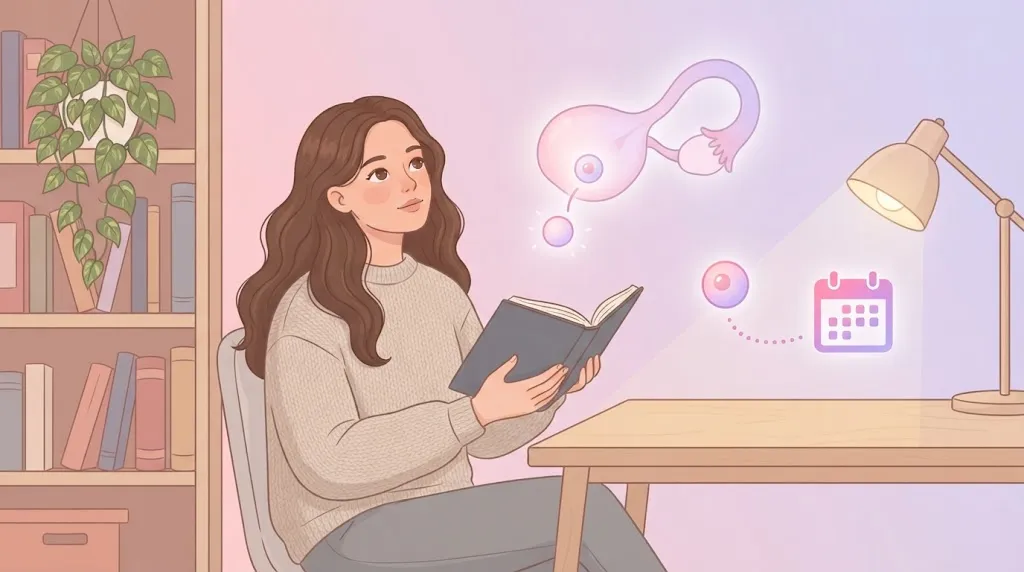
Ovulation is the moment one of your ovaries releases a mature egg. It happens once in each menstrual cycle, usually about two weeks before your next period. If you want the full picture of how this fits into your month, read about the four phases of your menstrual cycle.
In the first half of the cycle, called the follicular phase, the hormone estrogen slowly rises while an egg grows inside a follicle. When estrogen peaks, your brain releases a burst of luteinizing hormone (LH). That LH surge is the trigger that sets the egg free.
According to Cleveland Clinic, the egg only survives for about 12 to 24 hours after release. Sperm can live much longer inside the body, which is why your fertile window is roughly six days long: the five days before ovulation plus ovulation day itself.
All of the signs of ovulation in this article come from those hormone shifts. Rising estrogen changes your discharge and your cervix. The LH surge shows up on test strips. After ovulation, progesterone takes over, which warms you up a little and can make your breasts feel sore.
10 Signs and Symptoms of Ovulation
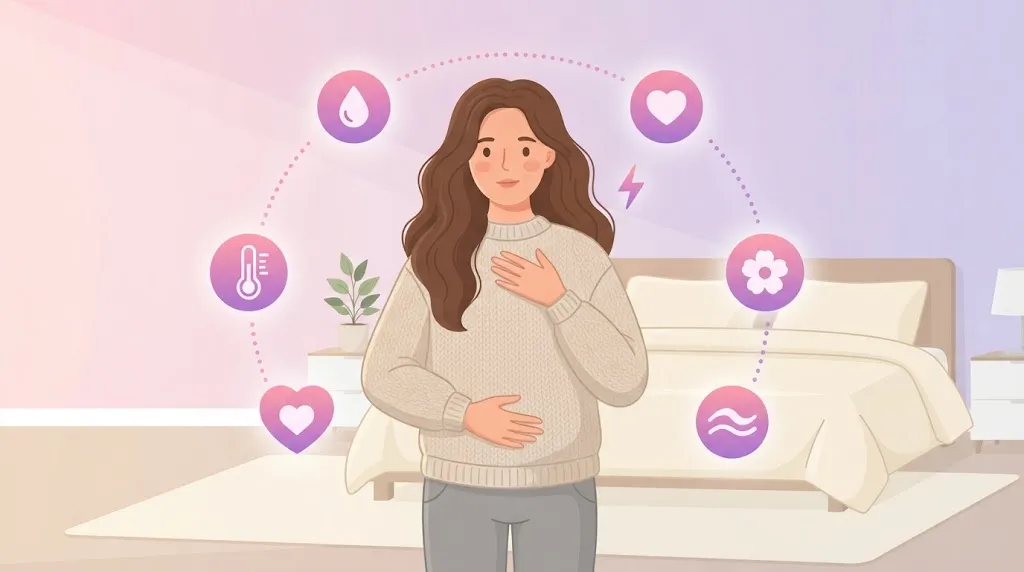
Below are the signs of ovulation in order of how much you can rely on them. The first four are the ones doctors and fertility educators lean on most. The rest are real, but they vary a lot from woman to woman.
1. Egg White Cervical Mucus
This is the clearest and most useful of all the signs of ovulation. As estrogen rises, your discharge changes from dry or sticky to creamy, and then to clear, wet and slippery. At its peak it looks a lot like raw egg white and can stretch between your fingers without breaking.
Cleveland Clinic explains that this fertile mucus usually appears for about three or four days around ovulation. Its job is practical: it helps sperm swim through the cervix and survive longer.
How to check: look at your discharge on toilet paper or underwear each day. Of all the signs of ovulation, this one is free and easy to learn. Your last day of slippery, stretchy mucus is often very close to ovulation day.
2. A Positive LH Test
Ovulation tests, also called ovulation predictor kits, measure LH in your urine. When the surge hits, the test line turns as dark as or darker than the control line.
The Better Health Channel notes that ovulation usually follows the LH surge within about 24 to 36 hours. That makes a positive test one of the best signs of ovulation for timing sex when you are trying to conceive.
Good to know: LH tests show that your body is trying to ovulate, not that an egg was definitely released. They are also less reliable if you have PCOS, which we cover further down.
3. A Rise in Basal Body Temperature
Your basal body temperature (BBT) is your resting temperature first thing in the morning, before you get out of bed. After ovulation, progesterone raises it slightly, by less than half a degree Celsius, and it stays higher until your next period.
The catch is timing. This rise happens after the egg is released, so BBT confirms ovulation rather than predicting it. It is still very useful: after two or three months of charting, you will see when your shift usually happens and can plan ahead.
How to check: use a digital thermometer at the same time every morning and write the reading down. A higher reading that holds for three days or more usually means ovulation has passed.
4. Changes in Cervix Position
Your cervix moves during the month. Around ovulation, Tommy’s describes it as sitting higher and feeling softer, a bit like your lips, while at other times it sits lower and feels firmer, more like the tip of your nose.
Among the signs of ovulation, this one takes the most practice and is not for everyone. If you want to try it, wash your hands well and check at the same time each day so you can compare.
5. Ovulation Pain or Cramps
Pain is one of the signs of ovulation you can actually feel. Some women notice a dull ache or a sharp twinge low on one side of the belly around ovulation. Doctors call it mittelschmerz, a German word that means middle pain. Cleveland Clinic says up to 40 percent of people who ovulate feel it.
The pain can last a few minutes or up to a day or two, and it may switch sides from month to month depending on which ovary releases the egg. A warm bath or a simple painkiller usually helps.
6. A Higher Sex Drive
Many women notice they feel more interested in sex in the days before ovulation. It makes sense biologically, since this is when pregnancy is most likely. It is one of the supporting signs of ovulation, not a test, because libido is also shaped by stress, sleep and your relationship.
7. Breast Tenderness
Rising hormones around and after ovulation can make your breasts feel sore, full or sensitive. This tends to build in the second half of your cycle and is easy to confuse with PMS, so note the day it starts.
8. Light Spotting
A small number of women see light pink or brown spotting around ovulation. The NHS mentions that a little bleeding or discharge can come with ovulation. It should be very light and short. Heavy bleeding in the middle of your cycle is not an ovulation sign and is worth checking with a doctor, as is a period that is unusually heavy.
9. Mild Bloating
Hormone shifts can cause a little water retention around ovulation, so your jeans may feel tighter for a day or two. Bloating often returns later in the cycle too, which is explained in our post on luteal phase bloating and weight changes.
10. A Sharper Sense of Smell or Taste
Some women say smells feel stronger or food tastes different near ovulation. Cleveland Clinic lists heightened senses among possible signs, but evidence is limited, so treat this one as a bonus clue rather than something to rely on.
Other Subtle Changes: Mood and Appetite
You may also notice more energy, a brighter mood, or changes in appetite around the middle of your cycle. These are softer signs of ovulation, common but very personal. If cravings hit harder later in the month, our article on whether period cravings are real explains why.
Which Signs of Ovulation Predict It and Which Confirm It?
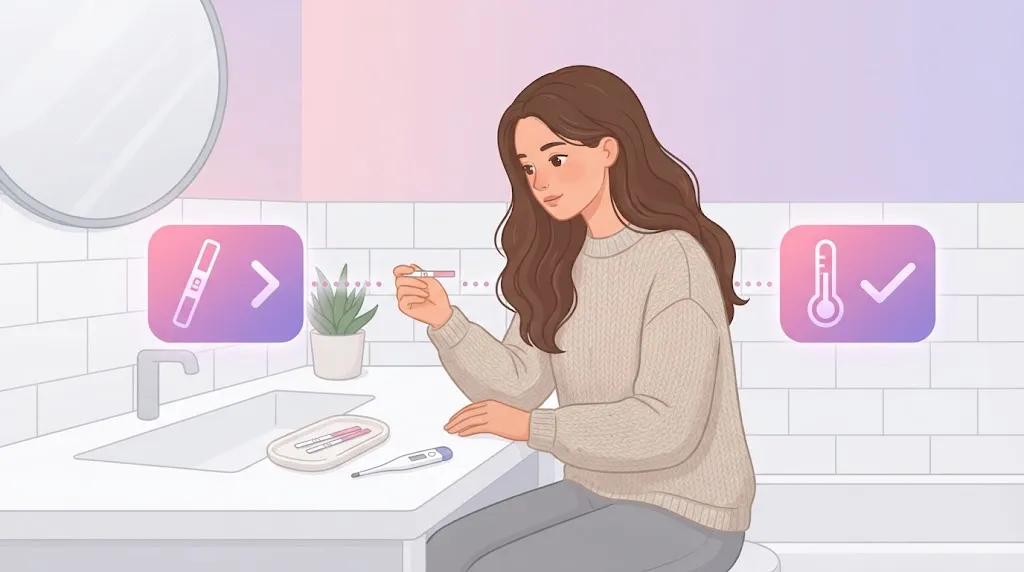
This is where most guides fall short. If you only watch one sign, you may act too late. Here is a simple way to group them:
- Signs that predict ovulation: egg white mucus, a positive LH test, a high and soft cervix, and a higher sex drive. These tell you to act now if you want to conceive.
- Signs that confirm ovulation: a temperature rise that holds for three days, or a progesterone blood test ordered by your doctor. These prove ovulation already happened.
- Supporting signs: pain, tender breasts, spotting, bloating and sharper senses. They add confidence but are not reliable on their own.
The best approach is to combine one predicting sign with one confirming sign. Mucus plus BBT, or LH tests plus BBT, gives you a much clearer picture than any single method.
How to Track Ovulation in One Cycle

You do not need fancy gear. Here is an easy plan you can start this month.
- Day 1: log the first day of your period in a cycle tracking app such as MyOvly.
- Every morning: take your temperature before getting up and record it.
- Every day after your period ends: note your discharge as dry, sticky, creamy or egg white.
- Around day 10 of a 28 day cycle: start LH tests once a day, ideally in the afternoon. If your cycles are longer, start a few days later.
- When you see egg white mucus or a positive LH test: these are your most fertile days.
- After three days of higher temperature: you can mark ovulation as confirmed for that cycle.
Repeat for two or three months. The signs of ovulation become easier to read with practice, and patterns become much easier to see once you have a few cycles logged side by side.
Signs You Might Not Be Ovulating
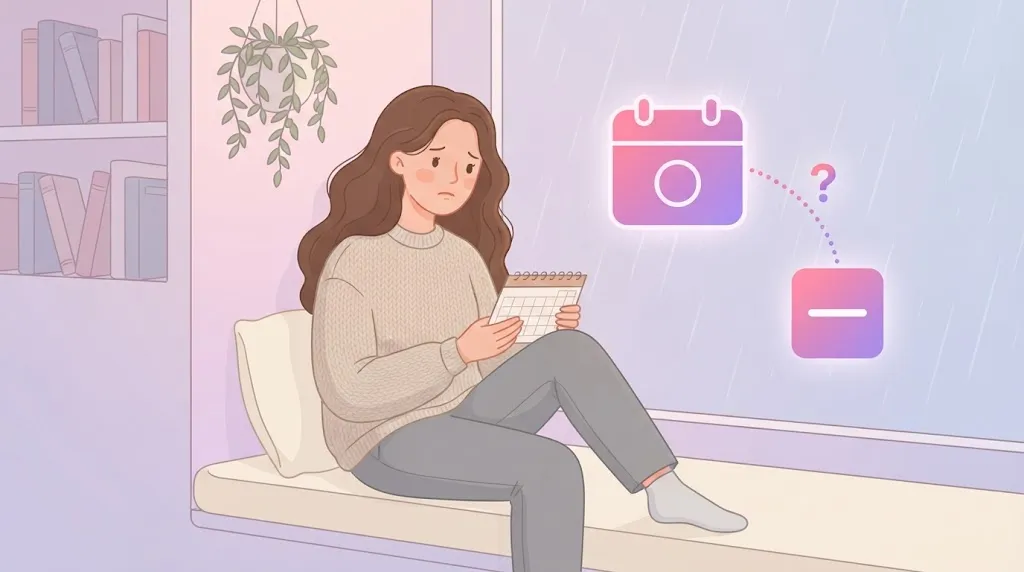
Sometimes the signs of ovulation simply do not show up. Not feeling symptoms does not always mean you are not ovulating, but these patterns are worth paying attention to:
- Your temperature never shows a clear rise during the cycle
- You never notice slippery, egg white mucus
- LH tests never turn positive, or they stay positive for many days in a row
- Your cycles are shorter than 21 days or longer than 35 days
- Your periods are very irregular or stop for months at a time
A late ovulation also means a late period, because the second half of the cycle stays fairly fixed. That is one reason behind why your period might be late, and why so many women have a period late but not pregnant. It can also explain a period one week late with a negative pregnancy test or even a period two weeks late with a negative test.
Everyday factors matter too. Stress can delay ovulation and your period, while an early ovulation can make your period come a few days early.
Ovulation With PCOS and Irregular Cycles

Polycystic ovary syndrome (PCOS) is one of the most common reasons women ovulate rarely or not at all. The Office on Women’s Health estimates it affects between 5 and 10 percent of women aged 15 to 44.
PCOS can make the usual signs of ovulation hard to read. Many women with PCOS have naturally higher LH levels, so ovulation tests may show several positives or stay positive without ovulation actually happening. Tommy’s notes that these kits may not suit people with PCOS for this reason.
If you have PCOS or very irregular cycles, temperature charting and mucus tracking are usually more helpful than LH tests alone. A doctor can also confirm ovulation with a blood test and suggest treatment if needed. Many women with PCOS go on to have healthy pregnancies with the right support.
When to See a Doctor

Most cycle changes are harmless, but book an appointment if you notice any of these:
- Ovulation pain that is severe, lasts more than a day, or comes with fever, vomiting or heavy bleeding
- Cycles regularly shorter than 21 days or longer than 35 days
- No period for three months or more and you are not pregnant
- No clear signs of ovulation for several cycles in a row
- Trying to conceive for a year without success, or for six months if you are 35 or older, as advised in NHS guidance on infertility
It also helps to know how late a period can be before it counts as a concern. Bring your cycle notes and a record of the signs of ovulation you noticed to the appointment, since they help your doctor a lot.
The Bottom Line
The signs of ovulation are your body’s way of telling you where you are in your cycle. Egg white mucus and a positive LH test tell you ovulation is near, a steady temperature rise confirms it has happened, and symptoms like one sided pain or tender breasts fill in the picture. Track a few signs together for two or three months and you will learn your own pattern, which is far more useful than any textbook average.
Frequently Asked Questions
1. How do I know if I’m ovulating?
↑2. What are the 3 main signs of ovulation?
↓3. What does ovulation feel like?
↓4. How long does ovulation last?
↓5. Is discharge a sign of ovulation?
↓6. Can you ovulate without any symptoms?
↓7. Can you ovulate but not get your period?
↓8. What are the signs that ovulation is over?
↓Medical Disclaimer
This article is for general education only and is not a substitute for medical advice, diagnosis or treatment. Every body and every cycle is different. If you have severe pain, irregular periods, or trouble getting pregnant, please speak with a doctor or a qualified healthcare provider.
References & Further Reading
- Cleveland Clinic: Ovulation
- Cleveland Clinic: Cervical Mucus
- Cleveland Clinic: Mittelschmerz
- Tommy’s: Ovulation and fertility
- Better Health Channel: Ovulation
- NHS: Ovulation pain
- Office on Women’s Health: Polycystic ovary syndrome
- NHS: Infertility