If you have ever stared at a calendar and asked yourself how many days after your period do you ovulate, you are in good company. It is one of the most searched fertility questions in the world, and the honest answer is a little more personal than the famous “day 14” rule suggests.
Here is the quick version. In a textbook 28 day cycle, ovulation happens about 14 days after your period starts, according to Cleveland Clinic. But very few cycles follow the textbook every month. A more reliable way to think about it is backward: most people ovulate roughly 10 to 16 days before their next period begins, as explained in NHS guidance on fertility in the menstrual cycle and by the pregnancy charity Tommy’s.
So the number of days after your period really depends on how long your whole cycle is. In this guide, we will walk through the simple math, the signs your body gives you, and the everyday things that can move your ovulation date, so you can find your own number instead of guessing.
How Many Days After Your Period Do You Ovulate? The Short Answer
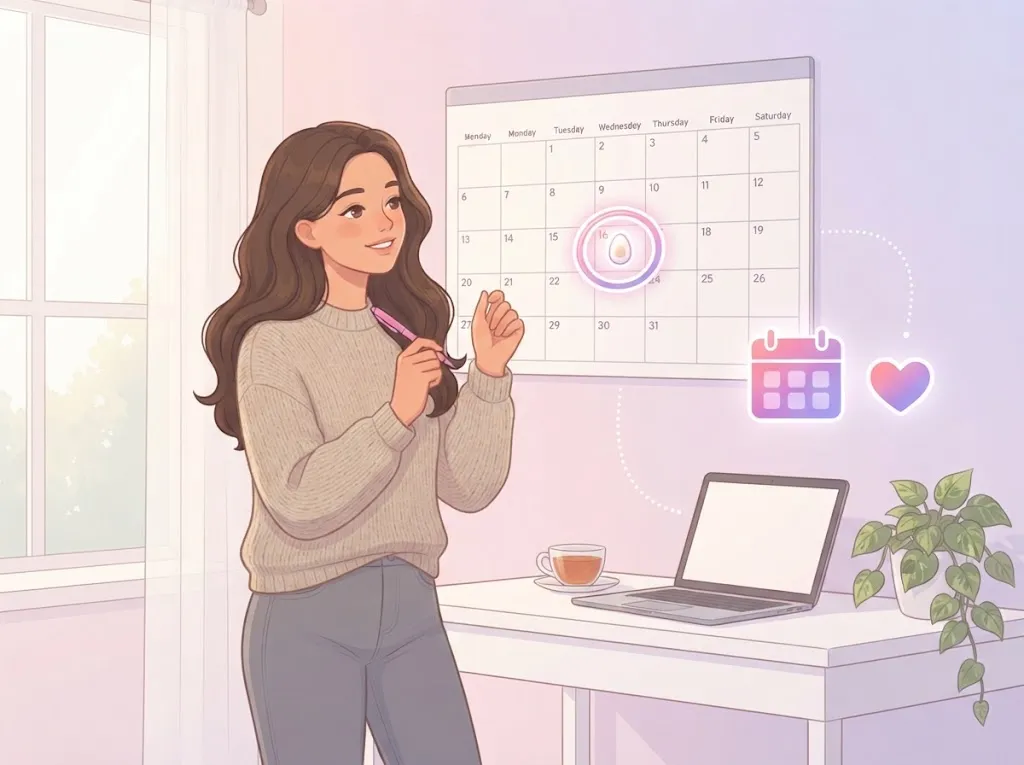
For most people, ovulation lands somewhere between cycle day 11 and cycle day 21, counting the first day of bleeding as day 1. With an average 28 day cycle, that usually means around day 14.
Two small details confuse a lot of people:
- Count from the first day of bleeding, not the last. Cycle day 1 is the day your period starts, even if it starts late in the evening.
- “After your period” can mean after it starts or after it ends. If your period lasts five days and you ovulate on day 14, that is only about nine days after the bleeding stops.
So when someone asks how many days after your period do you ovulate, the most useful answer is this: about 14 days after it starts in a 28 day cycle, and roughly your cycle length minus 14 in any other cycle.
A normal cycle can be anywhere from 21 to 35 days long, so a friend who ovulates on day 12 and another who ovulates on day 19 can both be completely healthy.
Why Ovulation Is Tied to Your Next Period, Not Your Last One
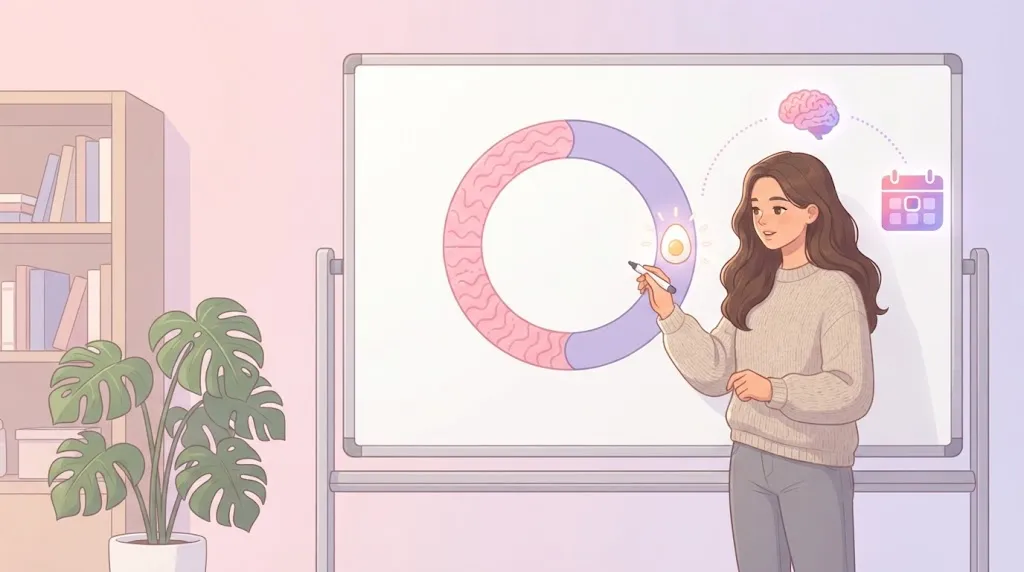
Your menstrual cycle has two main halves, and they behave very differently. Once you understand them, the whole question of how many days after your period do you ovulate starts to make sense.
The follicular phase: the flexible half
The follicular phase runs from the first day of your period until ovulation. During this time, follicle stimulating hormone helps several follicles grow inside the ovaries. Eventually one becomes dominant and holds a mature egg.
A review of fertility awareness research published in Frontiers in Medicine points out that this first phase is the part of the cycle that changes the most from month to month. Stress, illness, travel and hormone shifts can all stretch it or shorten it.
The luteal phase: the steady half
After the egg is released, the empty follicle turns into the corpus luteum and starts producing progesterone. This luteal phase is far more predictable and usually lasts about 12 to 16 days. Cleveland Clinic notes that most people get their period 14 to 16 days after ovulation, whatever their overall cycle length.
Progesterone in this phase is also behind many familiar premenstrual changes, like luteal phase weight gain from water retention and the snack attacks behind the question are period cravings real.
Because the second half stays fairly stable, the length of the first half decides when you ovulate. That is exactly why counting back from your next expected period works better than counting forward from your last one.
Ovulation Day by Cycle Length: Quick Chart
Use this simple formula: ovulation day is roughly your cycle length minus 14. Your fertile window is then about the five days before that day, plus ovulation day and the day after.
| Cycle Length | Likely Ovulation Day | Approximate Fertile Window |
|---|---|---|
| 21 days | Day 7 | Days 2 to 8 |
| 24 days | Day 10 | Days 5 to 11 |
| 26 days | Day 12 | Days 7 to 13 |
| 28 days | Day 14 | Days 9 to 15 |
| 30 days | Day 16 | Days 11 to 17 |
| 32 days | Day 18 | Days 13 to 19 |
| 35 days | Day 21 | Days 16 to 22 |
Treat each number as the middle of a small range rather than a fixed date. If your luteal phase is 12 days instead of 14, for example, ovulation happens two days later than the chart shows.
How to Work Out Your Own Ovulation Day
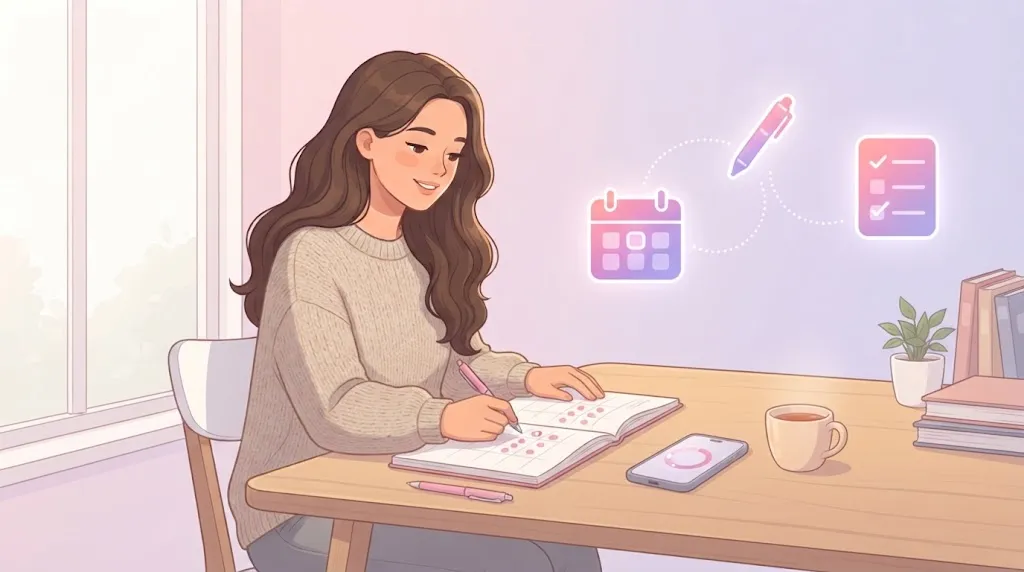
You do not need a lab to get a good estimate. You just need a little patience and a few months of notes.
- Track at least three to six cycles. Write down the first day of every period. Your cycle length is the number of days from day 1 of one period to the day before the next one starts.
- Find your average and your range. Note your shortest and longest cycles, not just the average. The gap between them tells you how much your ovulation date moves.
- Use the calendar method. Cleveland Clinic describes a classic calculation: subtract 18 from your shortest cycle to find your first likely fertile day, and subtract 11 from your longest cycle to find your last one. If your cycles run from 26 to 31 days, your fertile days likely fall between cycle day 8 and cycle day 20.
- Confirm with body signs. The calendar gives you a window. Your body tells you when you are actually inside it, which we cover next.
A period tracking app like MyOvly can do this counting for you once you log a few cycles, which saves a lot of calendar math.
Signs Your Body Is About to Ovulate
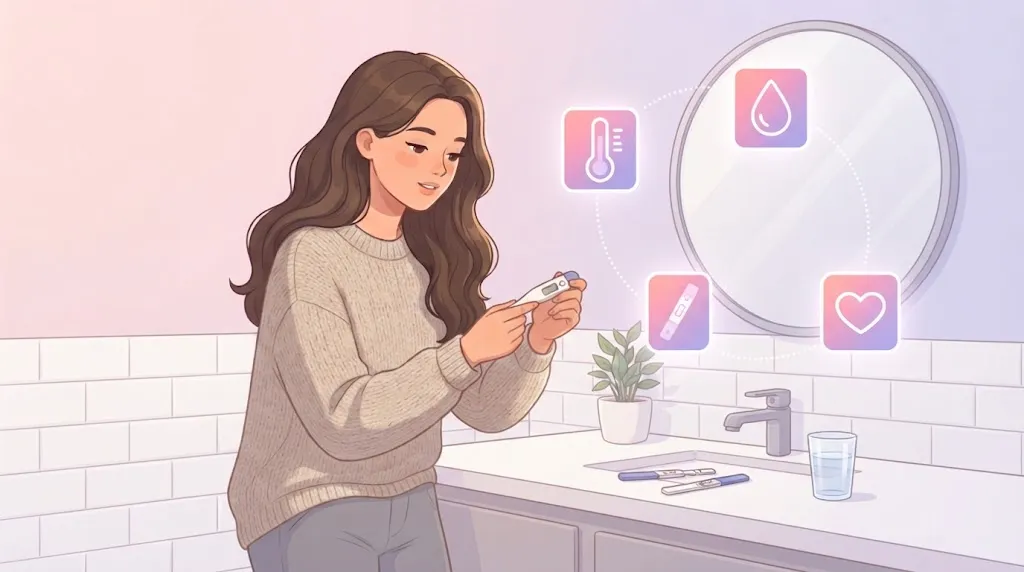
If you want to know how many days after your period do you ovulate in a specific month, your body usually drops a few hints. Watching more than one sign at a time gives you the clearest picture.
- Cervical mucus changes. In the days before ovulation, discharge becomes clear, slippery and stretchy, a lot like raw egg white. This is one of the most reliable signs you can check at home.
- A surge in luteinising hormone (LH). Ovulation predictor kits detect LH in urine. Tommy’s notes that this surge happens about 24 to 36 hours before ovulation, so a positive test means your most fertile days are right now.
- A small rise in basal body temperature. Your resting temperature goes up by around 0.2°C after ovulation and stays higher until your next period. It confirms ovulation after the fact, which is useful for learning your pattern over several months.
- Ovulation pain. Some people feel a dull ache or a sharp twinge on one side of the lower belly, sometimes called mittelschmerz. It can last a few minutes or a day or two.
- Other subtle changes. A higher sex drive, mild breast tenderness and light bloating are common around the middle of the cycle.
A systematic review on fertility awareness based methods found that mucus, temperature and hormone tracking all aim at the same goal: spotting ovulation and the fertile window around it. Using two of them together is usually more accurate than relying on the calendar alone.
Your Fertile Window: When Pregnancy Is Most Likely

Knowing your ovulation day matters because the egg does not wait around. Once released, it survives for only about 12 to 24 hours. Sperm, on the other hand, can live in the body for several days, and the NHS says sex in the days before ovulation can still lead to pregnancy.
That is why your fertile window is about six days long. It runs from roughly five days before ovulation through the day after. According to Cleveland Clinic, the highest chance of conception comes from sex one to two days before ovulation and on the day itself.
If you are trying to conceive, this means you do not need to hit one perfect day. Having sex every couple of days during your fertile window keeps sperm ready and waiting when the egg arrives, and it takes a lot of pressure off the process.
If you are trying to avoid pregnancy, keep in mind that calendar based estimates alone are not very reliable as birth control, especially if your cycles vary. Talk to a doctor or nurse about a method that suits you.
Can You Ovulate Right After Your Period?
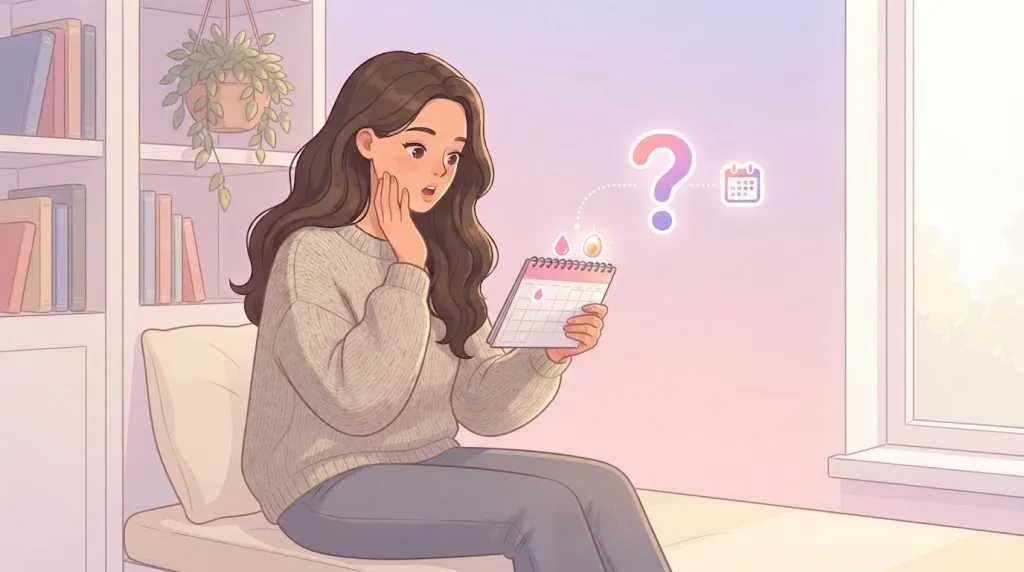
Yes, it can happen, especially with shorter cycles. If your cycle is 21 days long, you may ovulate around day 7, which can be only a day or two after bleeding stops. If your period lasts a full week, ovulation and the tail end of your period can even overlap.
The NHS explains that it is possible to get pregnant soon after your period, although it is not very likely for most people. The risk goes up if you ovulate early or have a naturally short cycle.
Early ovulation can also explain a period that shows up sooner than expected. If you have wondered why your period came 3 days early, a shorter follicular phase that month is one of the most common reasons.
What Can Shift Your Ovulation Date?

Even people with very regular cycles can ovulate early or late now and then. These are the most common reasons:
- Stress. Ongoing stress affects the hormone signals from your brain to your ovaries and can push ovulation back by days. Here is a closer look at how stress can delay your period.
- Illness, travel and poor sleep. A bad cold, jet lag or a run of night shifts can all throw off the timing for a cycle or two.
- Big changes in weight or exercise. Sudden weight loss, weight gain or a jump in training intensity can delay or even pause ovulation.
- Coming off hormonal birth control. It can take a few months for natural ovulation to settle into a rhythm.
- Breastfeeding. Nursing often suppresses ovulation, and the first ovulation after birth can come before the first period.
- Health conditions. Polycystic ovary syndrome (PCOS) and thyroid problems are common causes of late or missing ovulation.
- Age. In the years before menopause, cycles often become shorter, longer or less predictable.
Here is the key link most people miss: when ovulation happens late, your period comes late too, because the luteal phase still needs its usual 12 to 16 days. That is often the real story behind why is my period late and why so many people end up with a period late but not pregnant.
It also explains a confusing situation like a period 1 week late with a negative pregnancy test. If you ovulated a week later than usual, your body is simply running a week behind schedule. Knowing how late a period can be before it counts as irregular can help you decide when it is worth a check.
When to Talk to a Doctor
Most changes in ovulation timing are harmless and short lived. Still, it is worth booking an appointment if you notice any of these:
- Your cycles are regularly shorter than 21 days or longer than 35 days
- Your periods stop for three months or more and you are not pregnant
- You see no signs of ovulation for several cycles in a row
- You have been trying to get pregnant for 12 months, or 6 months if you are 35 or older
- Ovulation pain is severe, keeps coming back or does not ease with simple painkillers
Cleveland Clinic notes that irregular or missing periods can be a sign that ovulation is not happening. A doctor can check your hormones and thyroid and look for conditions like PCOS, and many of these causes are very treatable.
The Bottom Line
So, how many days after your period do you ovulate? In a typical 28 day cycle, the answer is about 14 days after your period starts. In every other cycle, take your cycle length and subtract 14, then confirm the estimate with signs like egg white mucus, a positive LH test or a temperature rise.
The second half of your cycle is steady, so ovulation is better linked to your next period than to your last one. Track a few months, learn your pattern, and you will have your own reliable number rather than a one size fits all rule.
Frequently Asked Questions
1. How can stress delay your period mechanically?
↑2. How long can stress delay your period?
↓3. Can stress cause a completely missed period, not just a late one?
↓4. Can stress delay your period even with a negative pregnancy test?
↓5. Does worrying about being pregnant make your period later?
↓6. How do I know if it’s stress or something else, like PCOS or a thyroid issue?
↓7. Will my period go back to normal once the stress goes away?
↓Medical Disclaimer
This article is for general education only and is not a substitute for medical advice. Every cycle is different. If you have irregular periods, severe pain or trouble getting pregnant, please speak with a doctor or a qualified healthcare provider.
Sources
- Cleveland Clinic: Ovulation
- NHS: Periods and fertility in the menstrual cycle
- NHS: Can I get pregnant just after my period has finished?
- Tommy’s: Ovulation and fertility
- Frontiers in Medicine: Fertility awareness based methods for women’s health and family planning (2022)
- Facts, Views and Vision in ObGyn via PMC: Fertility awareness based methods and subfertility, a systematic review