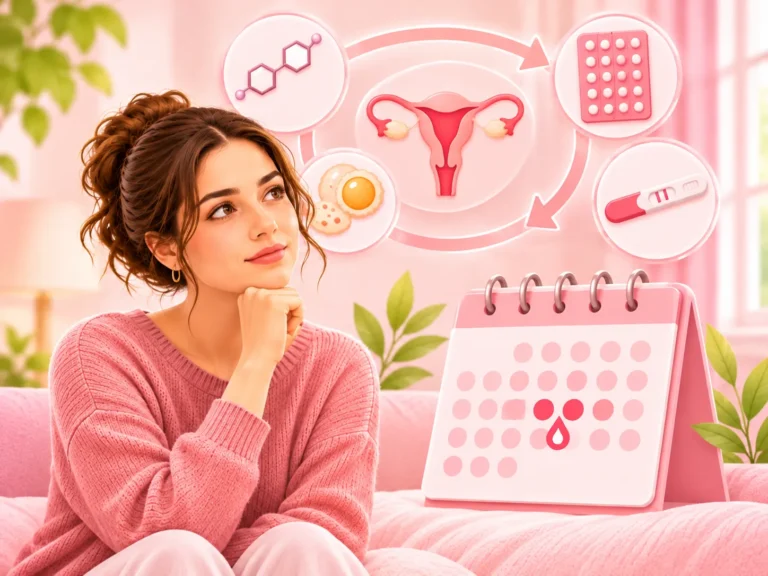

An ectopic pregnancy occurs when a fertilised egg implants and starts to grow outside the womb, most often inside a fallopian tube. Normally, tiny hairs in the tube move the fertilised egg toward the womb over a few days. If the tube is damaged, blocked or not moving the egg well, the egg can stop and implant there instead.
That is how ectopic pregnancy occurs in most cases. Many women have a known risk factor, such as a past pelvic infection or tube surgery, but about a third have none at all. Nothing you did in daily life caused it, and this guide explains what happens step by step.
How Ectopic Pregnancy Occurs: The Short Answer

Every pregnancy begins in a fallopian tube, where sperm meets the egg. The fertilised egg then has to travel down the tube and settle into the lining of the womb. An ectopic pregnancy happens when that journey stops early and the egg implants somewhere it can’t grow safely.
About 95 percent of ectopic pregnancies develop in a fallopian tube, according to the Royal Wolverhampton NHS Trust. The rest occur in rarer places, such as an ovary, the cervix, a caesarean scar or the abdomen. NHS leaflets put the overall rate at about 1 in 90 to 1 in 100 pregnancies.
A fallopian tube can’t stretch or nourish a growing pregnancy the way the womb can. As the pregnancy grows, it can damage the tube or cause it to burst, which leads to internal bleeding. For that reason, doctors treat every ectopic pregnancy as a medical problem that needs care, even before symptoms become severe.
If you’re worried about warning signs, our guide to the symptoms of an ectopic pregnancy explains what to look for and when to get emergency help. This article focuses on the “how” and “why”, so you can understand what happened in your body or assess your own risk.
How a Normal Pregnancy Reaches the Womb
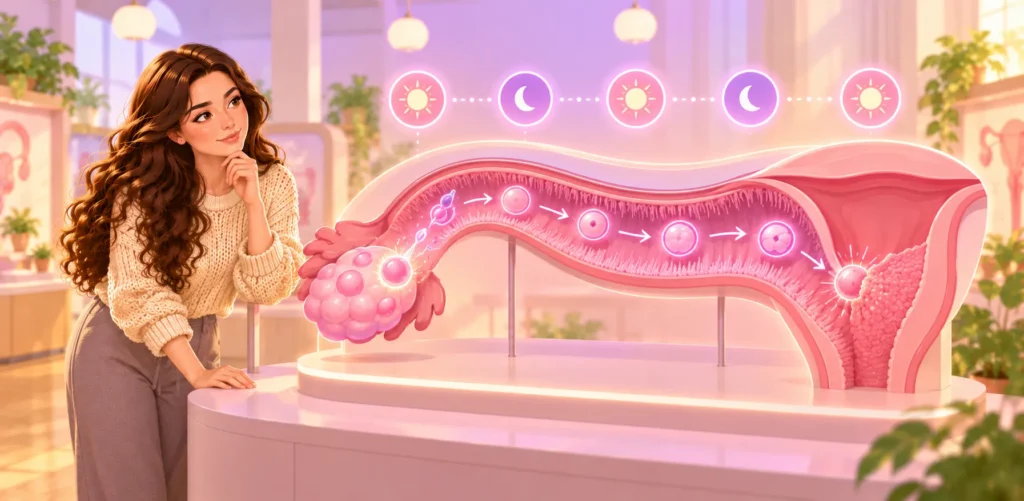
The journey starts with ovulation. Around halfway between periods, an ovary releases an egg into the nearest fallopian tube. Our guide on when you ovulate after your period shows how this timing works across different cycle lengths.
Fertilisation usually happens inside the tube. A West Hertfordshire Hospitals NHS leaflet notes that sperm can survive in the tubes for up to five days, so sex a few days before ovulation can still lead to pregnancy. That’s also why you can get pregnant on more than one day of your cycle.
After fertilisation, the egg doesn’t move on its own. The inside of the tube is lined with tiny hairs called cilia, and the tube walls contract. Together, they sweep the fertilised egg toward the womb, much like a slow conveyor belt carrying a parcel to its destination.
An NHS Western Isles leaflet explains that the fertilised egg normally spends 4 to 5 days in the fallopian tube before it reaches the womb. Implantation, when the egg attaches to the womb lining, usually happens about 6 to 7 days after fertilisation.
The womb is ready for this moment. Each cycle, hormones thicken its lining so a fertilised egg has a soft, blood rich place to settle. Our article on the phases of the menstrual cycle explains how that lining builds up and why it sheds as a period when no pregnancy happens.
What Goes Wrong: How an Ectopic Pregnancy Happens

In an ectopic pregnancy, the fertilised egg never completes its trip. The NHS Western Isles leaflet lists three main problems that can stop it: damage to the tube, a blockage, or problems with the tube’s contractions. Any of these can slow the egg enough that it implants in the tube wall.
Tube damage is the cause NHS leaflets mention most often. Scar tissue from an old infection or from surgery can narrow the inside of the tube or harm the cilia. The West Hertfordshire leaflet says a damaged or abnormal tube makes a fertilised egg more likely to get stuck there.
Hormones may play a part too. The Ectopic Pregnancy Trust explains that high dose progesterone, such as in emergency contraception, may affect the cilia. That’s one reason some hormonal methods appear on risk factor lists if a pregnancy happens while you use them.
Once the egg implants in the tube, the pregnancy can’t continue. The West Hertfordshire leaflet states that a tubal ectopic pregnancy never survives, and doctors can’t move it into the womb. Treatment aims to protect your health and, where possible, your fertility.
Sometimes doctors never find a reason. A tube can look healthy, and the woman may have no history of infection or surgery. In these cases, the egg’s journey didn’t go as expected, and no test or habit could have predicted it.
What Causes Ectopic Pregnancy: Risk Factors Explained

A risk factor raises the chance of an ectopic pregnancy but doesn’t cause one on its own. NHS leaflets and the Ectopic Pregnancy Trust list these factors, along with the reasons they matter:
- A previous ectopic pregnancy. Whatever affected the tube the first time may still be present, so the chance of another rises. Most women still go on to have a pregnancy in the womb.
- Pelvic infection. Infections such as chlamydia or gonorrhoea can cause pelvic inflammatory disease, which can scar the tubes. The West Hertfordshire leaflet lists past pelvic infection as a key cause of tube damage.
- Tube or pelvic surgery. Sterilisation, its reversal and surgery on or near the tubes can leave scar tissue. The Ectopic Pregnancy Trust also lists abdominal operations such as a caesarean section or appendix removal.
- Endometriosis. It’s linked with a higher risk, although the Ectopic Pregnancy Trust notes that experts don’t yet know why.
- IVF and other assisted conception. During embryo transfer, embryos can travel into a tube, the Ectopic Pregnancy Trust explains. Transferring more embryos raises the risk.
- Smoking. The Miscarriage Association says smoking may affect how the fertilised egg travels along the tube.
- Age over 35. Risk rises with age, possibly because older women have had more time to build up other risk factors.
Contraception needs a careful explanation. A coil (IUD) is very good at preventing pregnancy. If a pregnancy does happen with a coil in place, though, the West Hertfordshire leaflet says it is more likely to be ectopic. The NHS Western Isles leaflet adds the progesterone only pill to the list for the same reason.
The honest part is that many women have none of these factors. NICE and the West Hertfordshire leaflet say about a third of women with an ectopic pregnancy have no known risk factor, and the Ectopic Pregnancy Trust puts it closer to half. Any sexually active woman can have one, so the symptoms matter more than the checklist.
If you’re trying to conceive with PCOS or using fertility treatment, our guide on fertility with PMOS explains treatment options and when doctors monitor early pregnancies closely.
Where Does Ectopic Pregnancy Occur?
Most ectopic pregnancies occur in a fallopian tube, but the tube has several parts, and a few cases happen elsewhere in the pelvis. Knowing the site helps explain why doctors choose different treatments and why some rare types need specialist care.
| Site | Where it is | What to know |
|---|---|---|
| Ampulla (tube) | The wide middle part of the fallopian tube | Described by specialists as the most common site; fertilisation usually happens here |
| Isthmus (tube) | The narrow part of the tube closest to the womb | A tubal site, managed like other tubal ectopics |
| Fimbrial end (tube) | The finger like end of the tube near the ovary | A tubal site near the start of the egg’s journey |
| Interstitial (tube) | The part of the tube that passes through the womb wall | Rare; needs specialist care |
| Ovary | On or inside the ovary | Rare |
| Cervix | The neck of the womb | Very rare; needs specialist care |
| Caesarean scar | In the scar from a previous caesarean | Rare; needs specialist care |
| Abdomen | Inside the abdominal cavity | Very rare |
Specialist sources describe the ampulla, the wide middle section of the tube, as the most common site. That section is also where fertilisation usually takes place, so an egg that stops early is likely to stay there.
Rare sites often need specialist care, and doctors choose treatment based on the exact location and how you feel. A heterotopic pregnancy, where one pregnancy grows in the womb and another outside it at the same time, is very rare and is seen more often after fertility treatment.
Doctors find the site with a transvaginal ultrasound scan and hCG blood tests, usually repeated about 48 hours apart, according to the Royal Wolverhampton NHS Trust. Sometimes the scan can’t show where the pregnancy is at first, and doctors repeat the tests over a few days until it becomes clear.
Can You Lower Your Risk?

You can’t control every risk factor, and many ectopic pregnancies happen without one. A few steps can still lower the chance or help doctors find a problem early, above all if you’re planning a pregnancy or have had an ectopic pregnancy before.
Protecting your tubes matters most. Use condoms with new partners and get tested for chlamydia and gonorrhoea, because treating these infections early can lower the risk of tube damage. Stopping smoking before you try to conceive helps too, and it benefits the whole pregnancy, not only the tubes.
If you’ve had an ectopic pregnancy before, ask for an early scan in your next pregnancy. The Royal Wolverhampton NHS Trust recommends a scan at about 6 to 8 weeks to confirm the pregnancy is in the womb. It puts the risk of another ectopic pregnancy at about 7 to 10 percent, against about 1 percent in the general population.
Planning ahead helps with age related risk as well. Our guide to the best age to get pregnant with PCOS explains how fertility changes through your 30s and when to seek advice early.
Above all, an ectopic pregnancy is not your fault. The Ectopic Pregnancy Trust and the Miscarriage Association both stress this. None of the medical sources in this article link it to everyday things such as exercise, work or food, and nothing you could have done would have moved the pregnancy into the womb.
Frequently Asked Questions
1. Can stress or lifting cause an ectopic pregnancy?
↓2. Can you get an ectopic pregnancy with an IUD?
↓3. Can IVF cause an ectopic pregnancy?
↓4. Can an ectopic pregnancy move to the womb?
↓5. Will I have another ectopic pregnancy?
↓Conclusion: What This Means for You
Ectopic pregnancy occurs when a fertilised egg stops on its way to the womb and implants somewhere else, most often in a fallopian tube. Damage, blockage or poor movement in the tube are the usual reasons, and past infection, surgery, IVF, a coil and smoking raise the risk.
Many women have no risk factor at all, so the most useful step is to know the warning signs. If you might be pregnant and notice one sided tummy pain, unusual bleeding or shoulder tip pain, contact a doctor the same day. Our guide to ectopic pregnancy symptoms lists the emergency signs.
Tracking your cycle helps here too. If you log your period dates and ovulation in MyOvly, you can tell a doctor exactly when your last period started, which helps them date a pregnancy and read scan results. You can read more about MyOvly and its pregnancy mode, or browse more cycle and pregnancy guides in Health Insights.
If you notice anything in this article that needs updating, please contact us. For support after an ectopic pregnancy, the Ectopic Pregnancy Trust and the Miscarriage Association offer information and helplines.
Medical disclaimer: This article is for informational purposes only and does not replace professional medical advice, diagnosis or treatment. Consult a qualified healthcare professional about your symptoms or treatment options. If you could be pregnant and have sudden severe tummy pain, feel very dizzy or faint, call emergency services straight away.
References & Further Reading
- West Hertfordshire Hospitals NHS Trust: Ectopic Pregnancy Patient Leaflet
- NHS Western Isles: What Is an Ectopic Pregnancy?
- The Royal Wolverhampton NHS Trust: Ectopic Pregnancy Patient Leaflet
- NICE NG126: Symptoms and Signs of Ectopic Pregnancy and Initial Assessment
- The Ectopic Pregnancy Trust: Reasons for an Ectopic Pregnancy
- The Miscarriage Association: Ectopic Pregnancy Leaflet