

You notice a little blood when you wipe, even though your period is still a few days away. Maybe there is a faint pink mark on your underwear, or a brown stain that disappears by the next morning. It can leave you wondering whether your period is starting early or whether something else is happening.
Spotting before your period is fairly common, and it does not always mean there is a health problem. Hormonal changes, birth control, ovulation and pregnancy can all be associated with light bleeding. Sometimes, the explanation is simply that your menstrual flow is beginning slowly.
The timing, amount of blood and other symptoms can offer useful clues. Here is what to know about spotting before your period, including when it is worth speaking with a healthcare professional.
What Is Spotting Before Your Period?
Spotting is light vaginal bleeding that happens outside your usual menstrual flow. You might see a few drops of blood when wiping, a small mark on your underwear or light staining that does not require a regular pad or tampon.
The blood can look pink, red or brown. It may appear once and disappear, or continue on and off for a few days.
Spotting is different from a menstrual period. A period usually develops into a more consistent flow, while spotting tends to remain light. Still, the difference is not always obvious at first. A period that starts slowly can look like spotting during its first few hours.
Doctors may use the term intermenstrual bleeding for bleeding between menstrual periods. The term breakthrough bleeding is also used, particularly when bleeding happens while using hormonal contraception.
If you are unsure whether the bleeding is part of your period or happening between periods, note when it starts and whether your usual menstrual flow follows.
Is Spotting Before Your Period Normal?

A small amount of spotting shortly before menstruation can happen without indicating a serious problem. Some people notice a little brown or pink discharge a day or two before their period begins. Their normal menstrual flow then follows.
Changes in hormone levels throughout the menstrual cycle can also affect the uterine lining. This may contribute to light bleeding at different points in the cycle.
That said, spotting should not automatically be dismissed as normal. Pay attention if it is new for you, keeps returning, happens after sex or comes with pain or unusual vaginal discharge.
For example, if you have never experienced spotting before and suddenly begin bleeding between periods, it is worth discussing the change with a healthcare professional. The same applies if your cycle becomes noticeably irregular.
Your usual pattern matters. Understanding the phases of the menstrual cycle can help you recognize when bleeding happens and whether it is different from your normal period.
What Does Spotting 2, 5, or 7 Days Before Your Period Mean?
The number of days between spotting and your expected period can help describe the pattern. It cannot, by itself, identify the cause. Menstrual cycles differ, and ovulation does not happen on the same day for everyone.
Spotting 1 or 2 Days Before Your Period
Light spotting one or two days before your expected period may be the beginning of menstrual bleeding. You might first see a small amount of brown or pink blood before the flow becomes red and more consistent.
If this happens regularly and your period follows its usual pattern, it may simply be how your menstruation starts.
Spotting 5 Days Before Your Period
Spotting five days before your period has several possible explanations. Hormonal changes, breakthrough bleeding from contraception and other causes of bleeding between periods may be involved.
If you are asking, “Why am I spotting five days before my period?” consider whether this is a new pattern, whether you recently changed contraception and whether you have other symptoms.
A repeated pattern deserves attention, particularly if your periods have also become irregular.
Spotting a Week Before Your Period
Spotting a week before your period happens earlier than the start of menstrual flow for many people. It may be related to hormonal changes, contraception or another cause of intermenstrual bleeding.
If it happens repeatedly, lasts several days or occurs alongside pelvic pain or unusual discharge, arrange a medical assessment.
The timing can help your healthcare professional understand the pattern, but it should not be used to diagnose the cause on its own.
What Causes Spotting Before Your Period?
There is no single explanation for spotting before menstruation. Some causes are linked to the menstrual cycle, while others involve contraception, pregnancy or a health condition.
1. Hormonal Fluctuations
Estrogen and progesterone help regulate the menstrual cycle and changes in the uterine lining. When hormone levels fluctuate, some people experience irregular or unexpected bleeding.
Hormonal changes can happen for different reasons, including changes in cycle patterns, starting or stopping hormonal contraception, and the transition toward menopause.
Spotting alone does not prove that you have low progesterone or another specific hormone problem. If it keeps happening, a healthcare professional can decide whether further assessment is needed.
2. Ovulation
Ovulation is when an ovary releases an egg. Some people notice a small amount of spotting around this time, although many do not experience it at all.
Ovulation usually occurs before the next period, but its timing varies with cycle length and from one cycle to another. It should not automatically be assumed to happen on day 14.
If you notice light bleeding around the middle of your cycle, you can compare it with other possible ovulation signs. MyOvly’s guide to signs of ovulation explains some of the changes people may notice.
3. Hormonal Birth Control
Hormonal contraception can cause breakthrough bleeding, especially after starting a method or changing how it is used.
This can happen with birth control pills, hormonal implants, injections and hormonal intrauterine devices (IUDs). The bleeding may look like a few pink marks, brown discharge or light red spotting.
If the bleeding is persistent, becomes heavy or causes concern, speak with your healthcare professional. Do not stop or change prescribed contraception without checking what is appropriate for you.
4. Early Pregnancy
Light bleeding can happen during early pregnancy. This is one reason people may search for “spotting before period, could I be pregnant?”
However, spotting does not confirm pregnancy. It is also not possible to identify implantation bleeding from its colour, amount or timing alone.
If pregnancy is possible, take a home pregnancy test from the first day of your missed period. If you do not know when your period is due, many tests recommend testing at least 21 days after unprotected sex. Follow the instructions supplied with your test.
For a closer explanation of the differences and limitations, read MyOvly’s guide to implantation bleeding vs. a period.
5. PCOS and Other Hormonal Conditions
Polycystic ovary syndrome (PCOS) can affect ovulation and make menstrual cycles irregular. Some people with PCOS have long gaps between periods or unpredictable bleeding.
Thyroid disorders and other health conditions can also affect menstrual patterns. Spotting alone cannot tell you whether you have PCOS or a thyroid problem.
If your periods are frequently irregular or you notice other changes, a healthcare professional can assess your symptoms and decide whether tests are appropriate. You can also read about the relationship between PCOS and perimenopause.
6. Perimenopause
Perimenopause is the transition leading up to menopause. During this time, hormone levels change and periods may become less predictable.
You might notice changes in cycle length, flow or the timing of bleeding. Even so, new or persistent bleeding should be discussed with a healthcare professional rather than automatically attributed to perimenopause.
Any vaginal bleeding after menopause needs medical assessment.
7. Infections or Changes in the Cervix
Some vaginal infections and sexually transmitted infections can cause unusual discharge or bleeding. Inflammation of the cervix may also lead to spotting, including bleeding after sex.
Cervical polyps and other changes in the reproductive tract can be additional causes of bleeding between periods.
An unusual smell, itching, burning, pain during urination or pelvic discomfort may indicate that an examination or testing is needed. These symptoms do not identify a specific infection by themselves.
What Does Brown, Pink, or Red Spotting Before Your Period Mean?
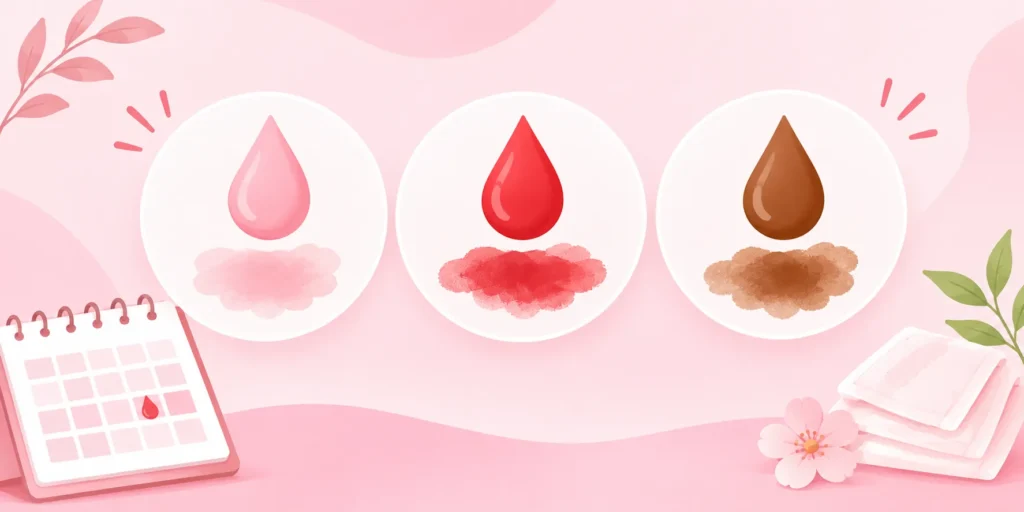
The colour of spotting can change depending on how much blood is present and how long it has taken to leave the body. Colour can describe what you see, but it cannot reliably identify the cause.
Brown spotting: Brown blood is often blood that has taken longer to leave the reproductive tract and has darkened. You may notice it as a small stain or brown discharge before your period. Read more about brown discharge before your period.
Pink spotting: A light pink colour may appear when a small amount of blood mixes with vaginal fluid or cervical mucus. It can happen at different points in the cycle.
Red spotting: Red blood is usually fresher blood. A few red spots may occur before menstrual flow becomes heavier, but red spotting can also happen between periods.
Dark brown or almost black spotting: This may also be older blood. The darker colour alone does not tell you whether the bleeding is harmless.
You may also notice changes in texture. Blood mixed with cervical mucus can look sticky, while small clots may appear during bleeding. If a new change in discharge comes with itching, irritation, an unpleasant smell or pelvic pain, seek medical advice.
Spotting Before Your Period vs. Early Pregnancy

Spotting close to an expected period can make it difficult to know whether menstruation is starting or pregnancy has occurred.
Both menstrual-cycle changes and early pregnancy can be associated with light bleeding. The appearance of the blood is not a reliable way to tell them apart.
| Feature | Spotting before a period | Bleeding in early pregnancy |
|---|---|---|
| Timing | Often occurs shortly before expected menstruation, but varies | Can occur at different times in early pregnancy |
| Colour | May be pink, red or brown | May also be pink, red or brown |
| Amount | Usually light | Can range from light spotting to heavier bleeding |
| What it confirms | Does not confirm a pregnancy or a specific cause | Does not, by itself, confirm the cause or outcome of a pregnancy |
Some people use the term implantation bleeding to describe light bleeding that may occur around early pregnancy. However, not every pregnancy involves this bleeding, and spotting cannot be reliably identified as implantation based on timing or appearance.
If you think you could be pregnant, take a pregnancy test at the appropriate time. A healthcare professional can advise you if the result is unclear or bleeding continues.
Know the warning signs: If pregnancy is possible and you have bleeding with one-sided or severe abdominal or pelvic pain, shoulder-tip pain, dizziness, weakness or fainting, seek urgent medical assessment. These symptoms can occur with an ectopic pregnancy, which needs prompt treatment. Do not wait for a positive home pregnancy test if you have severe symptoms. Read more about ectopic pregnancy symptoms and how an ectopic pregnancy occurs.
When Should You See a Doctor About Spotting Before Your Period?

A single episode of light spotting may settle on its own, but certain changes should be checked. Arrange an appointment with a healthcare professional if:
- Spotting happens repeatedly between periods.
- Bleeding occurs after sex.
- Your periods suddenly become irregular.
- Spotting continues, becomes heavier or is different from your usual pattern.
- You have pelvic pain, pain during sex or unusual vaginal discharge.
- You notice itching, burning or an unpleasant smell.
Seek urgent medical care if you have severe or worsening abdominal or pelvic pain, fainting, significant dizziness or heavy bleeding. If you are soaking through a pad or tampon every hour for more than two hours and also feel lightheaded, dizzy, short of breath or have chest pain, seek emergency care.
If you have reached menopause, any vaginal bleeding should be assessed, even if it is only a small amount of brown discharge.
What Might a Doctor Check?
The assessment depends on your symptoms, medical history and the possibility of pregnancy. Your healthcare professional may ask about your last period, usual cycle length, contraception, medications and when the spotting began.
Depending on what they find, they may recommend:
- A pregnancy test.
- Blood tests, including tests for anemia or hormone-related concerns when appropriate.
- Testing for vaginal or sexually transmitted infections.
- A pelvic examination.
- An ultrasound to look at the uterus and ovaries.
You may not need every test. The purpose is to understand why the bleeding is happening and choose the right next step.
How to Track Spotting and Cycle Changes

Before your appointment, it can help to record:
- The date spotting starts and stops.
- Whether the blood looks pink, red or brown.
- Whether it is a few spots or a heavier flow.
- Any cramps, pelvic pain or other symptoms.
- The date your period is expected and when it actually begins.
- Recent changes in contraception or medication.
A menstrual tracking app such as MyOvly can help you keep these details together. Tracking will not diagnose the cause, but it gives you a clearer record to discuss with your healthcare professional.
Frequently Asked Questions About Spotting Before Your Period
1. Is spotting before your period normal?
⌄2. Why am I spotting 5 days before my period?
⌄3. What does brown spotting before your period mean?
⌄4. Can spotting before your period be a sign of pregnancy?
⌄5. How many days before a period can spotting occur?
⌄6. When should I worry about spotting before my period?
⌄Final Thoughts
Spotting before your period can have several explanations, from the beginning of menstrual flow to hormonal changes, contraception or pregnancy-related bleeding. The colour and timing can offer clues, but neither can confirm the cause.
Keep track of changes in your cycle and pay attention to symptoms that occur alongside the bleeding. If spotting is new, persistent or worrying, speak with a healthcare professional rather than trying to diagnose it yourself.
Medical disclaimer: This article is for general educational purposes and does not replace medical advice, diagnosis or treatment. Speak with a qualified healthcare professional about unusual or concerning bleeding.
Medical References & Further Reading
- ACOG: Abnormal Uterine Bleeding
- NHS: Vaginal Bleeding Between Periods or After Sex
- ACOG: Bleeding During Pregnancy
- ACOG: Ectopic Pregnancy
- MedlinePlus: Vaginal or Uterine Bleeding