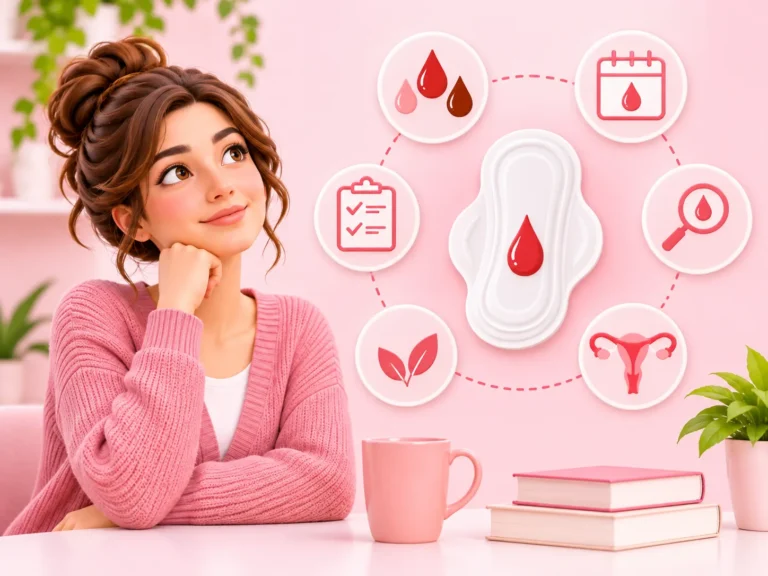

Blood clots in period blood are common, and small ones are usually normal. Clots smaller than about 2.5 cm, about the size of a UK 10p coin or a US quarter, often appear on your heaviest days. See a doctor if your clots are larger than that, if you pass them often, or if you soak a pad or tampon every hour for several hours in a row. If you could be pregnant and you notice clots, get medical advice the same day.
Blood Clots in Period: Are They Normal?

Most women pass a clot at some point. They tend to show up on the first two days, when your flow is heaviest, and they look like small, dark red, jelly like lumps.
Salena Zanotti, MD, an Ob/Gyn at Cleveland Clinic, puts small clots in the normal range. She says clots the size of a dime or a quarter can be normal for you, and that golf ball sized clots every couple of hours are a problem.
Size is one clue. The other clues are how often clots appear, how long your period lasts and how much blood you lose overall. A single large clot on day one tells a doctor less than a month of notes. Change matters too. If your periods always had a few small clots and now bring large ones every month, that new pattern is worth mentioning, even if the clots look like ones you’ve seen before.
What Causes Blood Clots During Your Period?

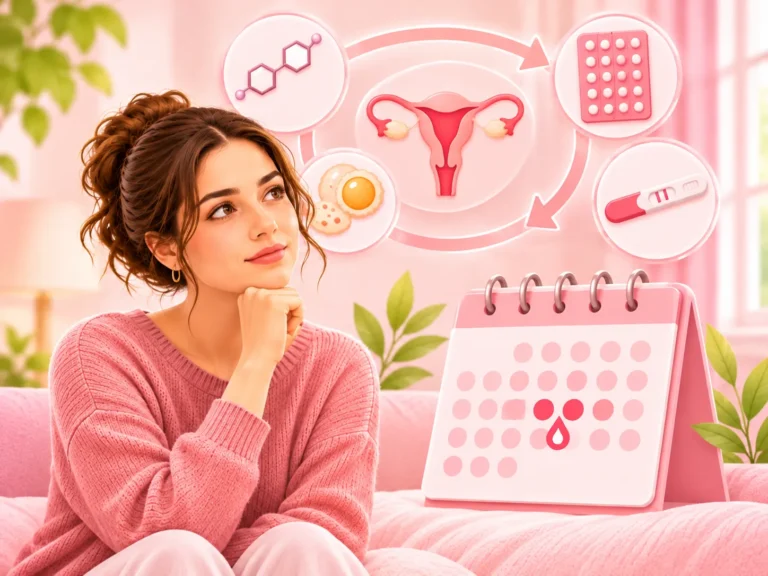
Each month the lining of your womb thickens. If you don’t get pregnant, the lining breaks down and leaves your body as your period. Our guide to the menstrual cycle phases explains this cycle step by step.
Your body releases substances that keep period blood thin as it flows out. On heavy days, blood can collect in the womb or vagina faster than those substances can work, and some of it forms clots. That’s why clots come with heavy flow and fade as your period gets lighter.
Clots contain blood and pieces of the womb lining, which gives them their jelly like texture. Bright red clots are fresh. Darker red or brown ones have spent longer in your body before coming out. Colour on its own doesn’t point to any particular condition.
Normal Clots vs Clots to Get Checked

The American College of Obstetricians and Gynecologists (ACOG) and the NHS use similar signs for heavy periods. Large clots are one of them.
| What you notice | Usually normal | Get it checked |
|---|---|---|
| Clot size | Smaller than about 2.5 cm (a 10p coin or a quarter) | About 2.5 cm or larger |
| How often | A few clots on your heaviest days | Clots in most periods, or many clots each day |
| Changing pads or tampons | Every few hours | Every 1 to 2 hours, or soaking one every hour for several hours in a row |
| At night | One product lasts the night | You need to get up to change, or bleed through to your bedding |
| Period length | 7 days or less | Longer than 7 days |
| Daily life | You carry on as usual | You skip work, school or exercise because of your period |
| How you feel | Normal energy | Tired or short of breath a lot |
Heavy periods can lead to iron deficiency anaemia. If you feel tired or short of breath most of the time, mention it to your doctor, because a simple blood test can check your iron. Tiredness has other causes too, and if you have PCOS, our article on whether PCOS makes you tired explains the links. Counting helps here. Keep a note of how many pads or tampons you use each day and whether any of them leak. If you need two products together, such as a pad and a tampon, the NHS treats that as another sign of a heavy period.
Our article on why your period is so heavy covers heavy bleeding in more detail.
Conditions That Can Cause Large Blood Clots in Period
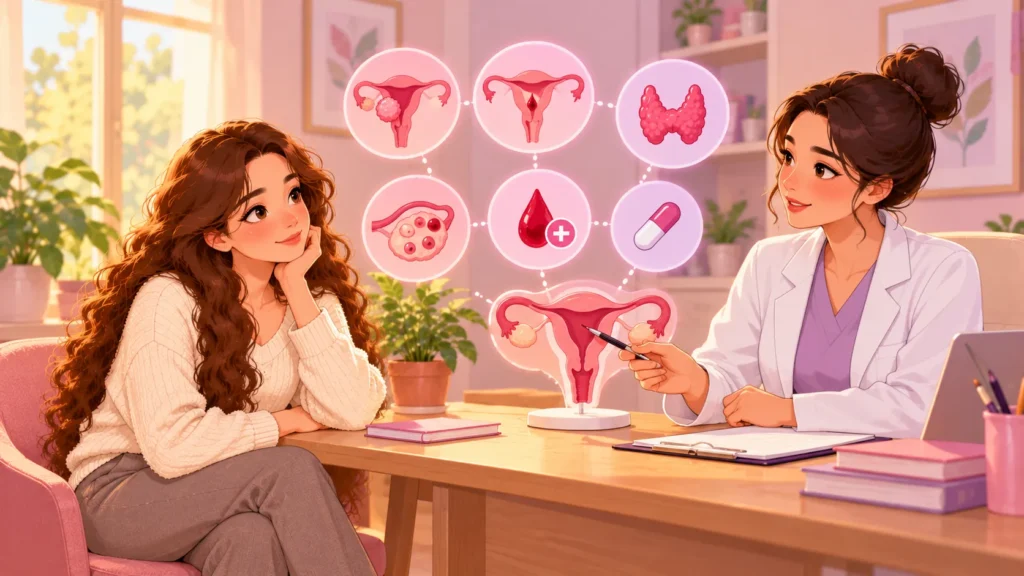
Large or frequent clots are a sign of heavy bleeding, and heavy bleeding has a cause worth finding. ACOG and the NHS list these:
- Fibroids and polyps: growths in or on the womb that can make periods heavier.
- Adenomyosis and endometriosis: conditions where tissue similar to the womb lining grows where it shouldn’t, often with painful periods.
- Irregular ovulation: when you don’t ovulate regularly, ACOG explains, the womb lining can grow too thick. This happens with PCOS, now also called PMOS, and with an underactive thyroid. Read more in our guides on whether PCOS can be cured and whether you can get pregnant with PMOS.
- Bleeding disorders: conditions such as von Willebrand disease stop blood from clotting well.
- Some medicines: the NHS names some anticoagulants (blood thinners) and chemotherapy medicines.
The NHS also notes that periods can be heavier when they first start, after pregnancy and as you approach menopause. If you’re in your 40s and your periods have changed, our article on PCOS and perimenopause may help. Rarely, heavy periods can be a sign of womb cancer, which is one more reason to get a lasting change checked.
A clot can’t tell you which of these you have. A doctor looks for the cause with questions about your periods, blood tests and sometimes an ultrasound.
Treatment depends on that cause and on how much the bleeding affects you. The NHS notes that heavy periods don’t always need treatment. When they do, a GP may offer some types of contraception, such as a hormonal coil (IUS) or the combined pill, or other medicines. If a condition such as fibroids or a bleeding disorder is behind the clots, treating that condition comes first.
Blood Clots in Period and Cramps

Clots and cramps often come together. Your womb contracts to push out its lining, and on heavy days those contractions are stronger.
Normal period pain eases with rest, a heat pad or over the counter painkillers. The NHS advises seeing a GP if you have severe pain during your periods, or if your periods come with pain when you pee, poo or have sex. Painful, heavy periods are common with adenomyosis and endometriosis, two of the conditions listed above, so describe your pain to your doctor as well as your clots. A pain score from 1 to 10 on your worst day gives them something specific to work with.
Could Blood Clots in Your Period Mean Pregnancy?

If there’s any chance you’re pregnant, don’t assume clots are a normal period. The NHS explains that bleeding in pregnancy can include clots or lumps, and that it’s important to get advice from a healthcare professional.
For light bleeding or spotting in pregnancy with no pain or mild pain, the NHS advises getting urgent help from your maternity unit, or from an early pregnancy unit if you’re less than 20 weeks pregnant. In Pakistan and many other countries, that means contacting your gynaecologist or the nearest hospital the same day.
Call emergency services if you’re pregnant and bleeding and you have:
- severe pain in your tummy
- pain in your shoulder
- feeling sick, faint or dizzy
- bleeding heavy enough to soak a pad soon after you put it on
If your period is late and a test is negative, read our guide on period late but not pregnant. It also helps to know that you can get pregnant right after your period, so a recent period doesn’t rule pregnancy out.
Frequently Asked Questions
1. Why am I passing jelly like blood clots?
↓2. What does an unhealthy period clot look like?
↓3. What can cause you to have blood clots during your period?
↓4. How many clots are normal on a period?
↓5. Are blood clots in period bigger than a quarter normal?
↓6. Is it normal to have blood clots in every period?
↓Conclusion: What to Track and When to See a Doctor
Small blood clots in period blood, mostly on heavy days, are a normal part of many cycles. Clots larger than about 2.5 cm, clots in every period, soaking a pad every hour or a period longer than 7 days are signs to get checked.
Before your appointment, track two or three cycles. Note the date each period starts and how many days it lasts, the biggest clot you see and how often clots appear, how often you change pads or tampons, any pain, and any tiredness or dizziness. Bring a list of your medicines too. MyOvly lets you log your flow and symptoms each day, so you can show your doctor the record instead of relying on memory.
See a doctor sooner if heavy periods are affecting your daily life, if you bleed between periods or after sex, or if your period pattern has changed. If you might be pregnant and you notice clots, seek help the same day.
Medical disclaimer: This article is for general information only and is not a substitute for medical advice, diagnosis or treatment. Every person’s cycle is different. Please speak with a doctor or qualified healthcare provider about your symptoms. If you have heavy bleeding with dizziness, fainting or severe pain, or you could be pregnant, seek urgent medical care.
References & Further Reading
- ACOG: Heavy Menstrual Bleeding
- NHS: Heavy Periods
- NHS: Vaginal Bleeding in Pregnancy
- Cleveland Clinic: Period Blood Clots: Should You Be Concerned?